The European Commission presented its long-promised Quantum Act in Strasbourg on Wednesday. The law is meant to turn Europe's strong quantum research into companies, factories, and products.
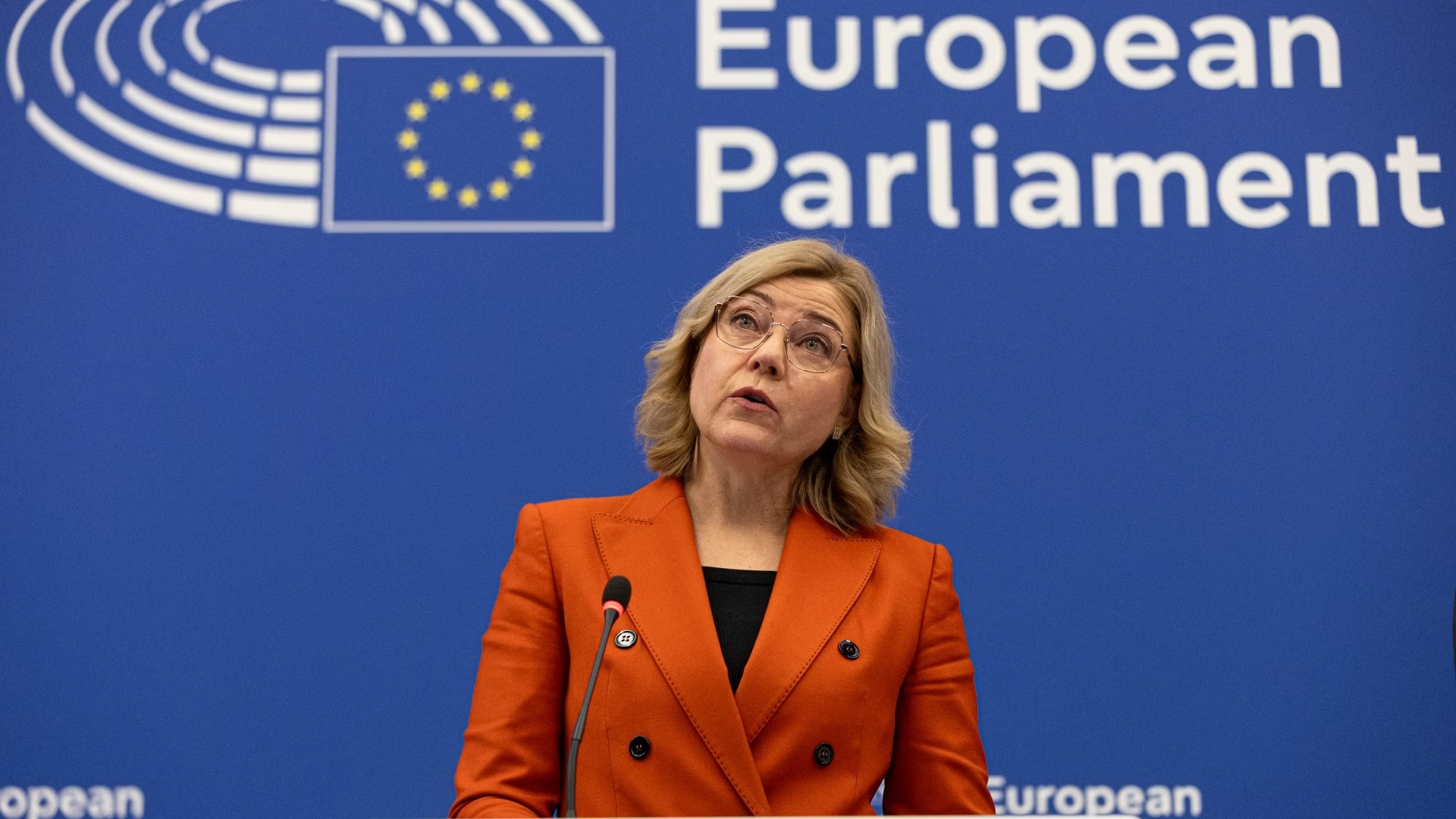
Henna Virkkunen, the Commission's tech chief, unveiled the plan after EU commissioners adopted it at their weekly meeting. She said quantum sits alongside AI, cloud, and chips in Europe's push to control the tech it depends on.
“Quantum is more than a next technological leap. It is the beginning of a new era of innovation, opportunity and discovery,” Virkkunen told reporters in Strasbourg.
Quantum computers use the physics of very small particles to crack problems that today's machines cannot. They promise faster drug discovery, but could also one day break the encryption that protects bank accounts and state secrets.
The technology is at a turning point, Virkkunen argued, as the first products enter the market and the global race speeds up. In her view, the money spent today will decide who builds the next wave of quantum computers, and who profits from them.
Europe starts from a position of strength, as it leads the world in scientific papers and quantum talent, and hosts a third of all quantum startups.
However, support is scattered across member states, and European quantum startups drew only 5% of global private funding, against 50% in the US. That gap leaves promising firms at risk of being bought by foreign rivals, or of moving abroad in search of money.
And this is what the Act tries to fix by pooling Europe's efforts. A new Quantum Europe Framework Initiative will bring national research programmes under one strategy and link top labs into a network of research excellence. It will also build shared tools, such as a quantum internet and quantum-aided medical scans, which no single member state could afford alone.
Moreover, the law gives companies a clearer path from the lab to the market as well. A shared hub will point them to engineering help and test sites across the EU, backed by accelerator centres in every member state. Once a technology matures, it can be named a strategic project, which unlocks funding to scale up production.
The Act reserves some public contracts for EU-controlled firms, and for companies from countries that have mutual deals with the bloc. A draft obtained by MLex in October had already revealed the plan.
The law also limits who can join flagship quantum projects, as The Quantum Insider had reported. The text says these limits are needed to protect the EU's security and independence.
“We want quantum technologies developed in Europe to be manufactured here and used here, while strengthening our security and preparing for a quantum-safe future,” Virkkunen said.
Brussels will also map Europe's most important quantum firms and parts, and track where the supply chain leans on outsiders. Public buyers in key sectors will need systems that can resist quantum code-breaking. This defence is known as post-quantum cryptography, or PQC.
“This makes the transition to PQC an urgent priority already today,” she said.
The Act also creates the legal base for the Sovereign Tech Equity Fund, a planned €50bn pot that would take large, direct stakes in European firms. The fund reaches beyond quantum to every technology the EU calls critical, and Virkkunen said it fills a long-running gap in Europe's growth capital.
The EU's EuroHPC supercomputing body will run the programme, and Brussels says it remains open to working with like-minded partners abroad.
This proposal turns the Quantum Europe Strategy of July 2025 into law, carrying its aim of putting Europe first in quantum by 2030. France has already placed a €500mn bet on homegrown quantum champions, while startups such as Finland's IQM run Europe's only private quantum chip factory.
The next steps are that this proposal must first go to the European Parliament and member states, which will debate and change the text, a process that usually takes years. The argument moves straight to Dublin, where the Act will top the agenda at the European Quantum Technologies Conference from 30 November to 2 December.
This article was updated.