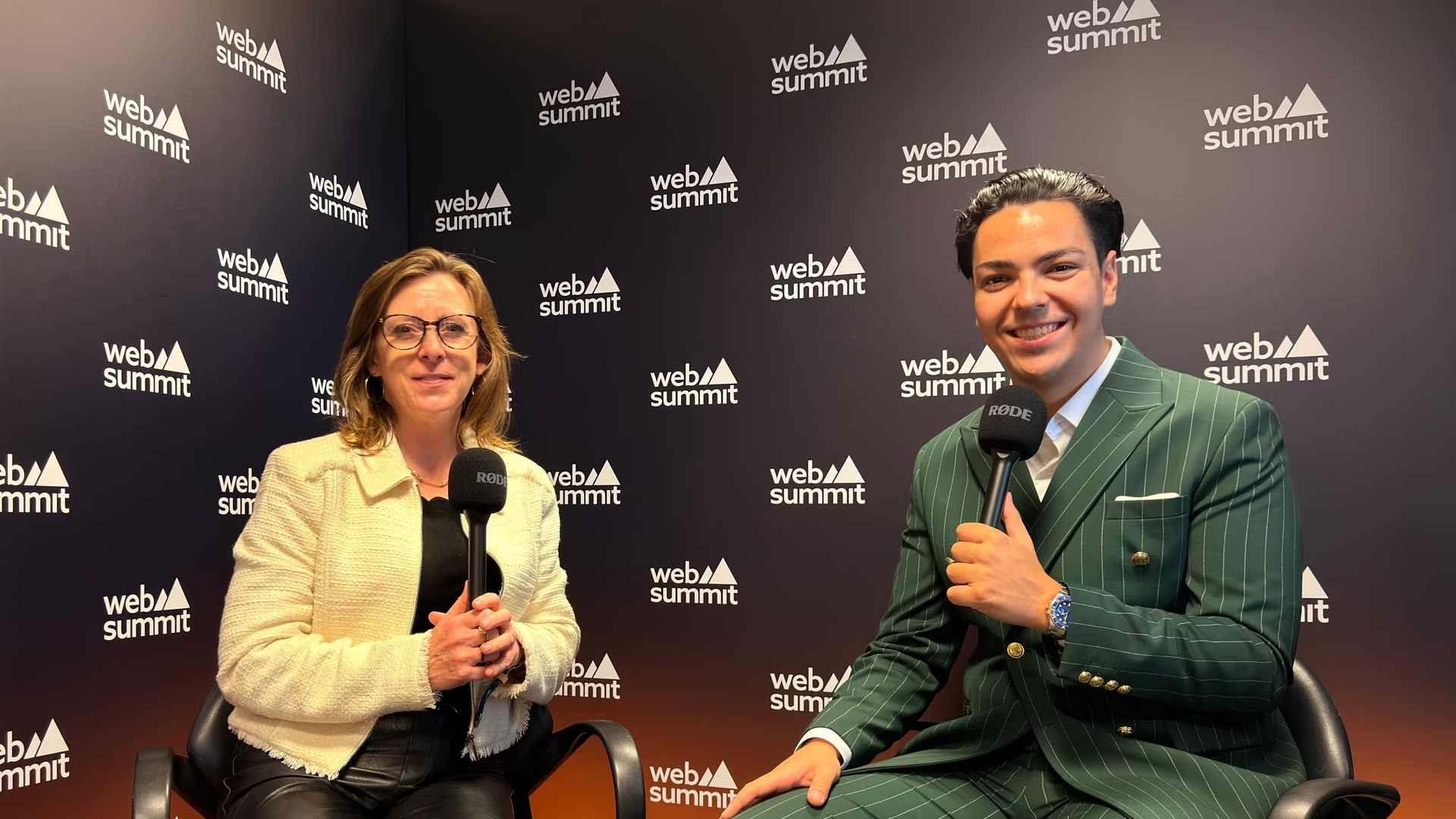
AI can now chain old bugs in a platform's code into an attack, Booking.com's Marnie Wilking told TNW. Some of those flaws may have sat unnoticed for five or 10 years, she said. Companies now have to go back, find them and fix them.
“AI can find those and then figure out how to chain multiple of those together to actually find its way through the system or figure out how to perpetrate fraud on your platform.” Marnie Wilking, Booking.com
Wilking is Booking.com's chief security officer, responsible for cybersecurity, fraud, trust and safety, and corporate security. She joined four years ago as chief information security officer.
She spoke to Cristian Dina for the TNW Podcast at Web Summit in Lisbon, her first time at the event. Earlier episodes featured Ronan Harris of Snap, Danila Shtan of Nebius, and Alexander Rinke of Celonis. The full conversation is in the video below.
Phishing in every language
Attacks on travel and hospitality ramped up after the pandemic, Wilking said. People rushed to travel again, and attackers saw the money in it. ChatGPT's release in November 2022 gave them AI. They can now send phishing messages at scale, in many languages, with flawless grammar and personal details.
Attackers may not have real booking details, she said. They can guess, or pick up hints from social media posts, such as a trip to Lisbon. They also go after hotels and other partners directly, stealing logins on Booking.com or at the hotel. Some steal travellers' logins to make fake bookings, which they then use to attack partners.
Booking.com now requires two-factor authentication for partners and for guests, Wilking said. Machine learning checks whether a login looks normal: the same phone, browser and IP address. If something looks off, the platform can ask for extra steps, such as entering card details again before a payment.
Attacks move to the supply chain
As those controls cut attacks on Booking.com's own platform, attackers turned to the wider ecosystem, she said. Targets include property management systems and travel agencies. Attackers also hit the connectivity providers that sync a property's calendar across Booking.com, Airbnb and Vrbo.
Booking.com shares threat intelligence through the Retail and Hospitality Information Sharing and Analysis Center (RH-ISAC). Some of its competitors and partners are members too. Members share new threats, not competitive information. One recent scam shared there flipped the usual threat of a cancelled booking.
“Oh, you paid us too much. Click on this link and give us your credit card details so we can give you a refund.” Marnie Wilking, Booking.com, on a scam message sent to guests
Smaller hotels often have no security team. Booking.com runs security and fraud sessions for its partners at events in Amsterdam, Asia Pacific and the Americas. Its approach has three parts, she said: prevent attacks, detect and respond quickly, and educate people.
AI on both sides
Booking.com's security team uses AI to scan its code repositories and external endpoints for flaws. Many are not security vulnerabilities in the traditional sense, Wilking said. They are bugs and business logic flaws that AI can chain together. She called it a cat-and-mouse game over who finds them first.
She compared AI to the internet in the late 1990s, then the mobile and cloud shifts, each faster than the last. Asked whether AI development should slow down, she said attackers will keep using it either way.
“Whether we choose as a society to say we'd like to slow this down, the bad guys are not going to slow down.” Marnie Wilking, Booking.com
Booking.com already has an AI trip planner, and is looking at AI for travel inspiration. Her team works with product teams on security, privacy, and trust and safety, she said, because AI can hallucinate. It must not invent a hotel or sell attraction tickets that are not real.
From banking to travel
Wilking studied maths. A Big Four consulting firm then recruited her for IT work at a big bank. She spent many years at Wells Fargo, ending as security officer for its mortgage division. She then moved to a smaller financial services company that worked in the cloud, became chief information security officer at a healthcare technology company based in Auckland, and later held the same role at Wayfair.
Her advice to travellers: use multi-factor authentication and a password manager, and be suspicious of anything that does not look right. If a message appears to come from a hotel, call the hotel directly.