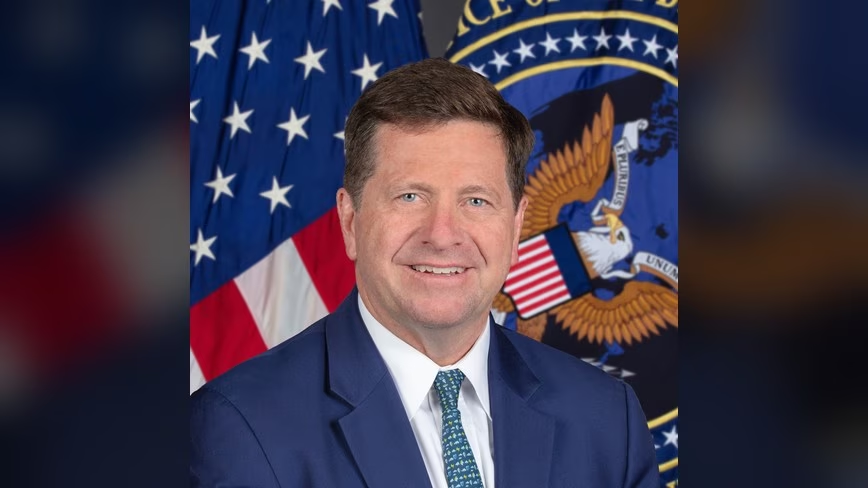
Hackers breached an unclassified system used by the CIA and at least two other US spy agencies, The New York Times reported on Tuesday. One of them was the Office of the Director of National Intelligence, run by Jay Clayton. The White House has just named Clayton its acting cyber director as well.
The intrusions hit an open-source intelligence system, which looks for insights in public and commercially available material. Dustin Volz, Tyler Pager and Julian E. Barnes reported it for The New York Times, citing US officials and other people familiar with the matter. Classified material was not put at risk, the people said.
The National Geospatial-Intelligence Agency was also affected, according to two of the people. One of them said the issue had been resolved. It is not clear what information the hackers reached.
An AI hacking tool
Some of the people told the Times they believed the hackers used Artex, an AI hacking tool released this year by a Chinese engineer. Investigators do not know who is responsible. Some early signs, including the use of Artex, suggest China may be behind it, two of the people said. Beijing routinely denies such allegations, according to the Times.
The FBI warned this month that the tool can break into networks in under three hours.
An ODNI official told the Times there had been no disruptions to critical capabilities. The CIA declined to comment, and the NGA did not respond to the newspaper.
David DiMolfetta confirmed the breach for Nextgov/FCW, citing a person familiar with the matter. He also reported that hackers recently used the tool in an intrusion into the Defense Department's Cyber Defense Command. One of two people familiar with that breach said it was low-impact. It is unclear whether it coincided with the spy agency hacks.
“If you can see what analysts are searching for and what topics they're tracking, you get a solid look at U.S. intelligence priorities and blind spots without ever touching a classified file,” Ben Bernstein, a manager at cybersecurity firm Huntress, told Nextgov/FCW.
The breach follows a hack of the FBI's crime database and a security incident at the Agriculture Department.
Clayton takes the cyber office
Clayton will lead the Office of the National Cyber Director as acting cyber director for now, Axios first reported. A White House official confirmed it to Nextgov/FCW on Monday. It is a third job for Clayton, who already oversees the spy agencies and coordinates the administration's approach to AI.
Pentagon CIO Kirsten Davies, named last week to replace Sean Cairncross, will instead seek Senate confirmation as the permanent director. She will be a senior adviser in the office in the meantime, according to Nextgov/FCW. Broad support for Davies persuaded Trump to nominate her, the official said.
The law does not let Davies act as director while her nomination is pending, Politico reported. It is unclear whether the Senate Homeland Security Committee, chaired by Rand Paul, will take up her nomination before the new Congress starts on 3 January, Politico said.
Clayton said in a statement that he was “excited to work more with Kirsten”, Nextgov/FCW reported.
He said he would help make her handover smooth.
More outages to come
On Sunday, Clayton told ABC's This Week that no one coordinated last week's outages and that no state sponsored them. Banks and the NSA have reportedly blamed some of them on rushed security patches.
“These were what I would say is delays, outages and the like resulting from upgrades to systems which are absolutely necessary going forward. And we're going to see more of that,” Clayton said.
Pressed on the FBI hack, he said cyber incidents had long been part of American life, and that the FBI was handling it as a routine incident. Reported cyber incidents had risen from about 750,000 in 2020 to more than a million, he said. He declined to discuss who was behind the FBI and Agriculture Department hacks.
On CNN the same day, Clayton said Americans should expect more interruptions in service as organisations modernise their systems.