Chinese military researchers fear US advances in AI could make China's nuclear missiles easier to find and destroy. The New York Times reported the findings on 23 November. Chris Buckley, its chief China correspondent, reviewed more than 100 recent Chinese studies. He also spoke to experts and former US officials.
The concern goes to the heart of Beijing's strategy. China's nuclear deterrent rests on enough missiles surviving a first strike to hit back. Chinese researchers warn that AI could help US forces detect, track and strike those missiles faster.
Two researchers from the Academy of Military Science in Beijing looked at AI in US nuclear decision-making.
“The United States could compress the decision-making process from the traditional 15 to 30 minutes to 90 seconds or less,” they wrote.
Fear of a first strike
Gerald C. Brown is a former State Department analyst who studies China's nuclear strategy. He told The Times that Beijing sees AI making its missiles' survival much harder. Sun Chenghao, of Tsinghua University's Center for International Security and Strategy, wrote to the paper that the risks weigh heavily in Beijing.
China has about 620 nuclear warheads, according to the Federation of American Scientists, as cited by The Times. The arsenal is widely forecast to reach about 1,000 by 2030. The United States and Russia each have around 1,800 warheads deployed.
Beijing has spread its forces out to protect them. In July, it test-launched a long-range missile from a submarine. It has also built about 320 launch silos in its northern deserts, The Times reported.
The US lead in advanced chips adds to the worry, Jacob Stokes of the Center for a New American Security told The Times. A US commission said last week that China's military is seeking Nvidia's most advanced chips.
Beijing's own AI push
China is also racing to use the technology. In July, Xi Jinping held a meeting of senior officials on the military uses of AI, The Times reported. The Rocket Force controls most of China's nuclear missiles. Its studies test how AI could help hypersonic weapons and ballistic missiles dodge defences.
Some researchers in the People's Liberation Army warn against moving too fast. A study this year from two military institutes said false data magnified by AI creates enormous risks for command and control.
Philip Reiner runs the Institute for Security and Technology in California.
“Nobody's turning launch decisions over to A.I., but everything that tells you whether you should launch is now going to be shaped by A.I.,” he told The Times.
No talks on safeguards
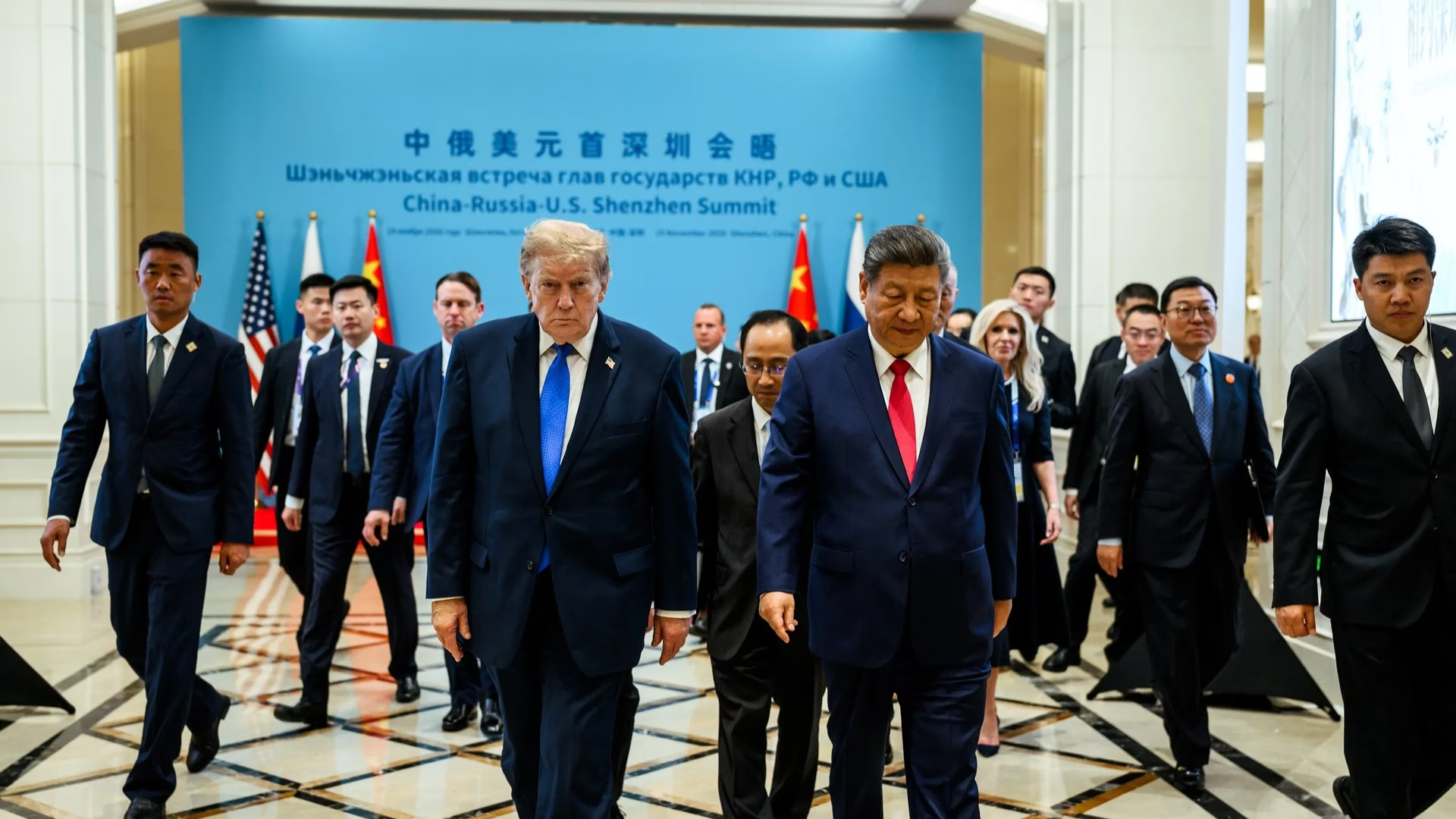
Xi agreed with then-President Joe Biden in 2024 to keep human control over the decision to use nuclear weapons. No official talks on the issue have followed, The Times reported. Xi, Donald Trump and Vladimir Putin met at the Shenzhen summit last week. AI in nuclear weapons did not come up.
Last month, Pope Leo urged a ban on lethal autonomous weapons before talks in Geneva.