AI has given us self-driving cars, movies made from prompts, proactive agents and, soon, humanoids. Yet booking the same Uber we take every morning still means unlocking a phone, opening an app, entering a destination and confirming. Joining a meeting still means hunting for the link, opening another window and searching for the controls. Our devices have done these tasks hundreds of times and have all the data to know what we need. Yet we keep repeating the same steps.
While the intelligence behind our devices has changed dramatically, the way we interact with them has barely changed. AI for consumers is still trapped within “software”. We are still using the most powerful technology of our time on interfaces like touchscreen phones and keyboards. They were designed for a different era.
For the last 15 months, Aina has been operating in stealth as a Human-Computer Interaction (HCI) lab. It has been developing a new interface designed, from the ground up, for the age of AI.
An AI ring with a screen
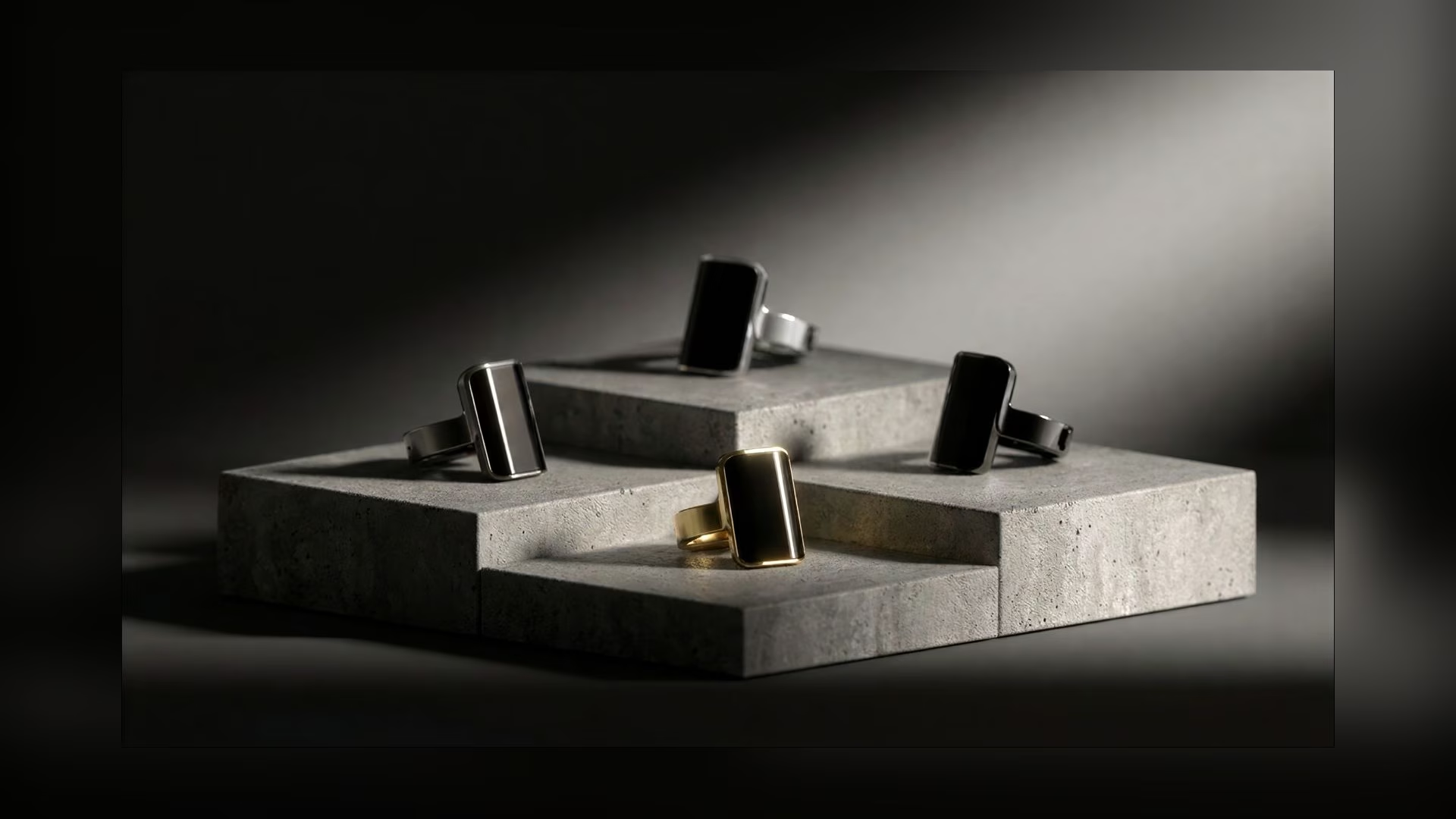
Today, the company unveiled Aina, a new AI interface in the form of a ring that knows what you want. It aims to redefine the way we control everything. A proprietary Context Aware Operating System powers Aina. It self-learns your patterns and pulls in context from your phone, computer and agents. Then it predicts the three things you need next.
Aina surfaces exactly what you need, on the ring's display, just before you need it. Flick up and down to approve or reject a suggestion, or hold the centre button to talk to your agents. Aina is designed as the most convenient way to control everything. That ranges from managing proactive agents, controlling meetings, your computer and smart home devices to booking cabs and taking calls, all with the flick of a finger.
Apoorv Shankar, founder at Aina, said:
“We started building Aina with a thesis that AI would evolve from following instructions to anticipating what we need. With proactive agents, that shift has already begun. Agents like Muse, Instinct and Dots will soon run hundreds of our daily tasks. Today we instruct them by text or voice. Next, they'll learn our patterns, build on our context and turn proactive for almost every interaction, waiting only for our approval. Hundreds of times a day, we'll choose between options and say yes or no. Pulling out and unlocking a phone for each of these binary moments won't work. Hardware interfaces beyond the phone will be built for voice and quick approvals, and Aina is designed for that future.”
As a new interface that adapts to you, there are three ways to use Aina.
Aina Voice
Aina Voice is the fastest way to interact with your AI agents or take quick notes. Connect your existing agents through the Aina app, then simply press and hold the centre button to talk to them. When your agent needs you, you see a notification on the screen. For quick approvals, simply flick up to approve, or hold to respond by voice.
Aina also has a built-in speaker for conversations with AI agents and phone calls. Users can initiate a call with a voice command and bring their hand to their ear to speak and listen.
Aina Cues
Aina's context-aware OS, which constantly learns about you, powers Cues: proactive suggestions. Aina pulls in context from your phone, Mac and your agents to learn your app usage patterns, location and calendar details. Then it computes what you may need next.
Aina knows you leave for work at nine. So it keeps a shortcut (Cue) to book an Uber to work ready just before you need it. When you're running late for a meeting, Aina surfaces a shortcut (Cue) to send an email that you're running late. As agents turn more proactive, Cues surfacing on Aina just before we need them will control most of our daily tasks.
Aina Remote
Aina adapts to what you're doing and surfaces a live shortcut to control your current activity. When you're playing music, it becomes your music remote control. In a meeting, it becomes a meeting controller for your mic, camera and notetaker. Watching TV, it becomes a remote for your TV. Aina truly adapts to you, becoming whatever you need, right when you need it.
Apoorv Shankar added:
“Every major shift in computing has come from software and hardware built together. The mouse and the GUI brought personal computing. The touchscreen and the App Store brought mobile computing. Now, with Aina and AI agents, we enter a new era: personalized computing, right at your fingertips.”
From an HCI lab to a consumer product
Aina's launch follows more than a year of research into how people will interact with computers in the age of AI. Shankar, the former VP of Hardware at Ultrahuman, founded Aina in May 2025. Aina began as a Human-Computer Interaction lab, testing physical interfaces across everyday computing scenarios.
At CES 2026, the team showcased three experimental AI interface concepts. In April, it introduced Dune, a context-aware three-key keypad for Mac that adapts its controls to the app in use. Dune shipped to hundreds of early adopters.
The team had been building Aina in stealth. Dune, other interfaces and close interactions with early adopters helped with user research, verified elements of their thesis and listed the high-frequency use cases people care about.
Since early October, the company has also been testing Aina with a controlled group of private pilot users. It has used their feedback to refine the hardware and interaction experience ahead of its public reveal.
Availability
The company unveils Aina globally on 5th November. Pre-orders open November 5, with Super Early Bird pricing starting at USD $399 for limited units, with global shipping. Aina plans to begin shipping in January 2027. At launch, Aina supports iOS and Mac. The company will announce additional details about supported integrations after launch. More information is available at aina.com.
About Aina
Aina is a design-led consumer hardware company building in the space of Human Computer Interaction for the age of AI. Apoorv Shankar, former VP of Hardware at Ultrahuman, founded it in May 2025. It announced a $5.5 million seed round in July 2026. Its 40-person team across San Francisco and Bangalore brings together experience in consumer hardware, industrial design, engineering and manufacturing. With the Aina Ring now publicly unveiled, the company is moving from private testing toward bringing its interface to a wider consumer audience.