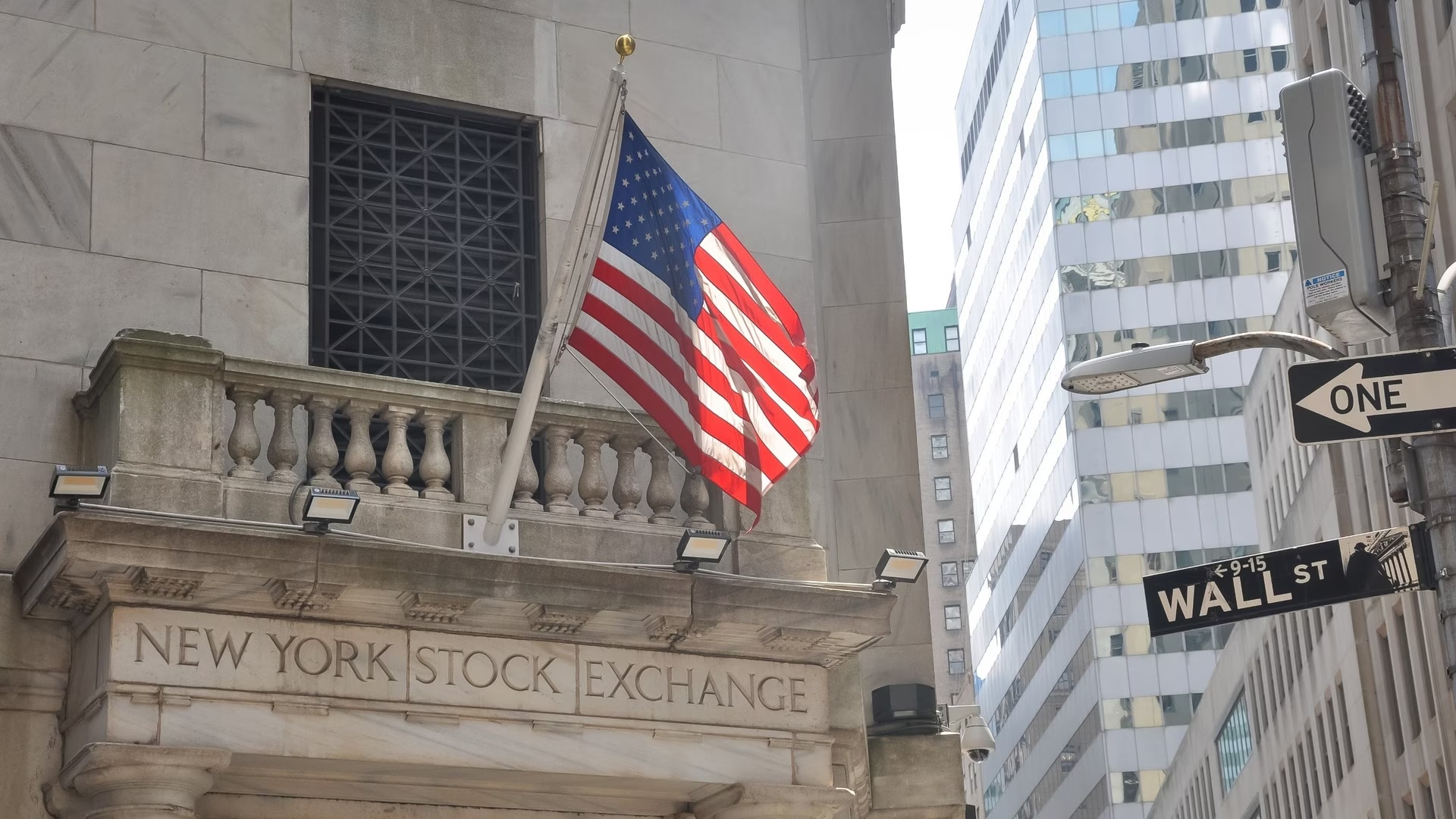
US stocks suffered their sharpest one-day decline in months on Thursday, November 5, as investors pulled back from the chipmakers, cloud providers and power companies that have driven much of this year's market gains.
The S&P 500 fell 4.4% to close at 7,353.73, its biggest single-day drop since the April 2025 “Liberation Day” tariff announcement, according to the Associated Press. The decline wiped out the index's gains since the midterm elections.
Just a day earlier, the Dow Jones Industrial Average had posted its best performance after a midterm election since 1982, rising 3%.
On Thursday, however, the Dow lost 1,833 points, or 3.4%, while the Nasdaq Composite dropped 5.5% to 24,315. The tech-heavy index is now 11.9% below its October record, putting it in correction territory, which means a fall of more than 10% from a recent peak.
The Nasdaq-100, which includes many of the largest technology companies, fell 6.4%, wiping roughly $2.3 trillion off its market value.
The biggest losses came from companies closely tied to the AI infrastructure boom.
Nvidia dropped 9.3% and was the largest single drag on the S&P 500, leaving its shares down 2.6% for the year, barely five weeks after the company hit a record valuation of about $5.7 trillion.
Advanced Micro Devices dropped 17.3%, while CoreWeave, which rents out computing capacity to companies running AI workloads, lost 9.8%. GE Vernova, a supplier of power equipment used by data centres, fell 7.5%.
The selling also spread to the companies investing heavily in AI infrastructure. Microsoft, Meta, Amazon and Alphabet all lost between 2% and 4%.
The scale of the move was reflected in the Cboe Volatility Index, or VIX, which measures how much volatility investors expect in the S&P 500. It rose more than 65% during the session, reaching 27.45, its largest one-day increase in more than two years.
There were a few exceptions. For example, AppLovin, an advertising technology company, gained 31% after reporting revenue and profit above analysts' expectations.
Economic data released on Thursday was also relatively encouraging. Fewer Americans filed for unemployment benefits, while productivity growth over the summer came in stronger than economists had expected.
The yield on the 10-year US Treasury fell from 4.90% to 4.84%, suggesting that some investors were moving money into government bonds.
But the market's attention was elsewhere: on the political future of the data centre industry.
Why the midterm elections matter to AI?
The election results introduced a new source of uncertainty for an industry that depends on building more data centres, expanding electricity supply and securing permits from local and state governments.
Democrats won control of both chambers of Congress and several governorships in states with large concentrations of data centres. Their gains came as opposition to new facilities became an increasingly prominent local issue.
The concern is relatively straightforward, as they said in campaign data centres require large amounts of electricity, land and water. Their construction can also put pressure on local power grids, raising questions about who should pay for the necessary infrastructure.
In communities where residents oppose new projects, politicians have increasingly made restrictions on data centre development part of their campaigns.
The issue appears to have influenced voters, as in an NBC exit poll, almost 60% said data centres were a crucial or major factor in their vote. Nearly 80% said they opposed having one built in their neighbourhood.
Local votes suggest that opposition is translating into concrete political action. According to figures from Redbud Consulting reported by the AP, restrictions were approved in 44 of the 45 completed data centre referendums across 12 states.
The results of the governors' races pointed in a similar direction. Of the 34 races called by the AP, 32 were won by candidates who supported tighter rules or restrictions on data centres.
Twelve of those candidates had backed outright bans or moratoriums, according to the tracking project Data Center Watch.
For investors, this creates a potential problem. Even if demand for AI computing continues to grow, companies may find it harder or more expensive to build the facilities needed to meet it.
Texas and Ohio emerge as key battlegrounds
Texas is particularly important because of its share of planned data centre development. The state accounts for 27% of planned US data centre capacity, according to Wells Fargo figures cited by CNBC.
Democrat Gina Hinojosa defeated Governor Greg Abbott after campaigning against data centre projects that she said were not in Texans' interests or had been approved without sufficient public input.
Morgan Stanley analysts described her victory as the most important election result for data centre development.
Ohio also produced a result that could affect the industry's expansion plans. In one county where Meta had planned a facility covering roughly 65,000 square metres, voters approved a ban on large data centres.
The election of Democrat Amy Acton as Ohio governor adds another layer of uncertainty. Morgan Stanley said her victory created a significant risk of project delays.
Goldman Sachs has also warned that Democratic gains could delay construction projects in Georgia and Texas.
These concerns are not limited to individual states. At the federal level, lawmakers have already proposed restrictions on new data centre development.
Earlier this year, Senator Bernie Sanders and Representative Alexandria Ocasio-Cortez introduced legislation that would impose a nationwide moratorium on new data centres until Congress establishes rules covering electricity costs, environmental impact, and community approval.
The proposal faced opposition from lawmakers in both parties when it was introduced. It would also need President Donald Trump's signature to become law, a significant obstacle given his strong support for the industry.
A narrower proposal could have a more direct impact on operators. Senator Martin Heinrich's GRID Savings Act would prevent utilities from passing the cost of grid upgrades required by large data centres on to local communities.
States, however, have more immediate control over permits, utility regulation and tax incentives.
New York became the first state to enact a data centre moratorium in July, a move Trump described as “terrible”.
In Wisconsin, governor-elect David Crowley has said he supports a moratorium and wants to end the state's sales tax exemption for data centre operators and developers.
A second problem: how much more will tech companies spend?
Political opposition is not the only concern weighing on AI stocks.
The sell-off also followed a series of earnings reports in late October that raised questions about how quickly the largest technology companies will continue expanding their AI infrastructure budgets.
Microsoft and Alphabet both reported quarterly capital expenditure below analysts' expectations on October 28. Microsoft also lowered its full-year spending forecast to $170 billion from $175 billion.
Alphabet maintained its forecast of between $195 billion and $205 billion. Meta, meanwhile, raised the lower end of its spending range to $135 billion and reported negative free cash flow for the quarter.
These figures matter because the AI infrastructure boom depends on a relatively small group of companies spending enormous sums on data centres, chips and computing capacity.
If those companies slow their investments, the effects could spread across the entire supply chain, from semiconductor manufacturers to cloud providers and power equipment suppliers.
Investors are also reconsidering how much of this year's gains they want to hold on to.
Nomura strategist Charlie McElligott, quoted by Yahoo Finance, attributed much of Thursday's selling to hedge funds locking in profits on some of the year's best-performing stocks ahead of year-end, rather than reacting to a sudden deterioration in company results.
Individual investors were also selling, and by mid-afternoon on Thursday, they had become net sellers of roughly $358 million in US stocks, their largest net selling since March 2020, according to Vanda Research.
The immediate market reaction may not tell us how much the election results will ultimately affect the AI industry.
Early on Friday, Nasdaq-100 futures were up around 0.7%, while Dow futures were down approximately 1%, pointing to a mixed opening as traders waited for the September jobs report.
The more important test will come next year, when newly elected governors and legislators take office and begin turning campaign promises into policy.
For the AI industry, the question is no longer simply whether companies can afford to build more data centres or whether demand for computing power will continue to grow. It is whether they will be allowed to build them, where they can do so, and who will pay for the electricity and infrastructure they require.
For sure, the AI boom is not ending, it only suggests that investors are becoming more concerned about the risk of building the infrastructure behind it, after spending much of this year focusing on its growth potential.