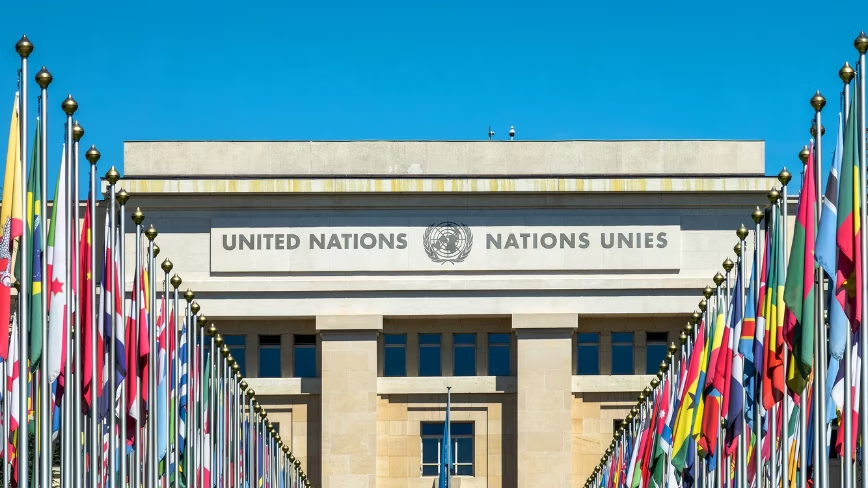
A May 5 draft, due to be discussed in New York in August, takes aim at where digital revenue is taxed and by whom.
A new draft protocol circulating inside the United Nations tax process would let countries tax companies like Google, Amazon and Meta based on where their users are, rather than where the companies are incorporated.
The text, dated May 5 and first reported by Bloomberg Tax, is the most concrete attempt yet to convert a decade of debate over digital taxation into binding international law.
The draft covers a broad list of digital activities. Online advertising, search, social media platforms, online gaming, cloud computing, and the supply of user data all fall within scope. So do online intermediation platforms and digital content services, which between them capture most of the business models the largest US platforms run on.
The protocol sits inside the UN Framework Convention on International Tax Cooperation, which member states approved a terms-of-reference for in late 2024.
The convention's Intergovernmental Negotiating Committee, the INC, agreed in early 2025 to develop two early protocols alongside the main convention: one on cross-border services, which is the document leaked this week, and one on dispute prevention. The INC's stated deadline is to finish the convention and both protocols by 2027.
The May draft is due for negotiation in New York in August, the next substantive session of the INC. Member states will arrive in significantly different positions. India, Brazil and a large bloc of African and Asian countries have pushed hardest for source-based digital taxation, on the grounds that current rules let highly profitable platforms pay tax almost entirely in the countries where they happen to be headquartered.
The United States has historically resisted unilateral and multilateral digital taxes alike, and a Trump-administration Treasury is unlikely to soften that position; previous European digital services taxes have been met with the threat of retaliatory tariffs from Washington.
The text also lands at a particular moment for the parallel OECD process, which has spent years trying to deliver Pillar One, its own answer to the same question. Pillar One has stalled, in part because US ratification has not materialised. The UN protocol is, in effect, a sign that a large share of the world is no longer willing to wait for the OECD route to clear.
What the draft does not yet settle is the calibration. The text would significantly change how much companies pay and where, but the specific allocation formulas, withholding rates and dispute mechanisms remain open.
Those are typically where multilateral tax texts succeed or fail. The August session will be the first real read of how far the negotiating coalition is prepared to go and what the US delegation, if it attends in full, is prepared to live with.
Whatever emerges will not be law for some time. Even if a protocol is adopted in 2027, ratification by enough states to give it force is a separate, slower process. But the direction of travel, on the evidence of the May draft, is unmistakable.