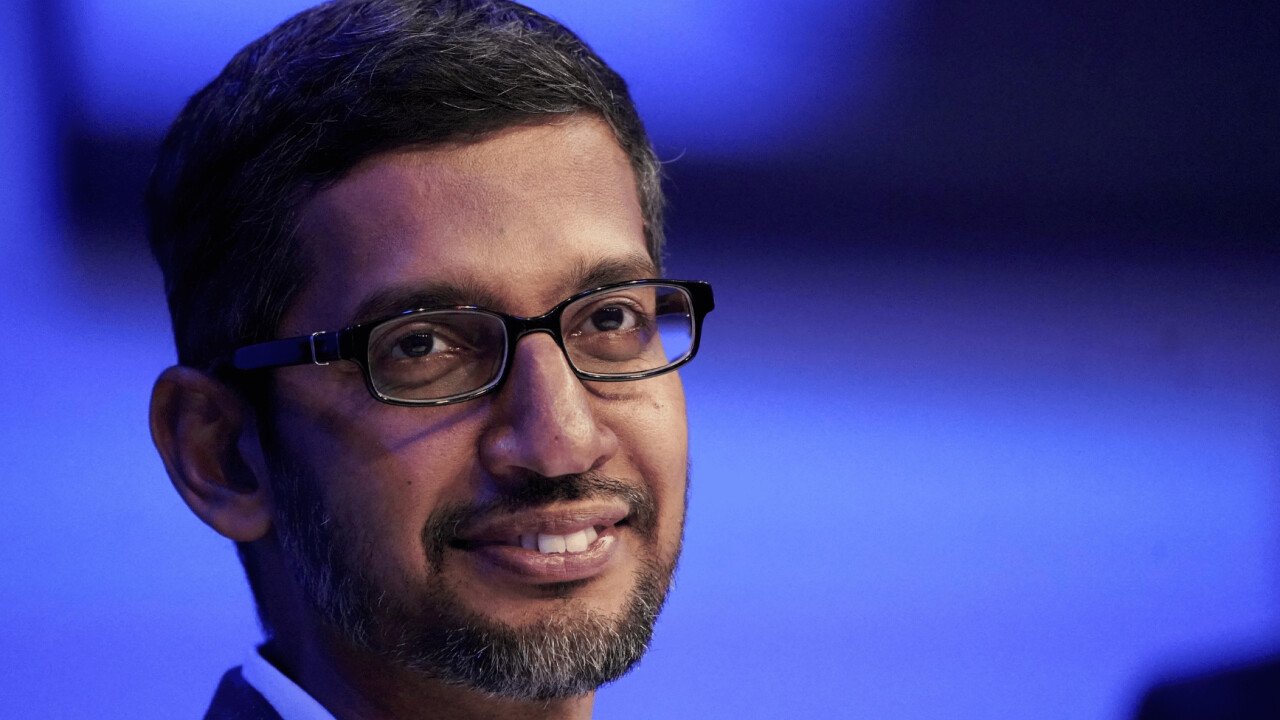
Sundar Pichai has run Google since 2015 and Alphabet since 2019. In that time, the company's market value has grown from roughly $535 billion to approximately $3.6 trillion. On Friday, Alphabet's board decided what that performance is worth going forward: a three-year pay package that could reach $692 million, but only if Pichai actually earns it.
The deal was disclosed in an SEC filing and first reported by the Financial Times. Its structure is telling. The headline figure assumes maximum performance across every component.
Most of the value is tied not to Alphabet's core search and advertising business, but to two subsidiaries that have spent years consuming capital without generating it: Waymo, the autonomous vehicle unit, and Wing, the drone delivery arm.
How the package is built
The base components are relatively standard for a CEO at Pichai's level. His salary remains $2 million a year, unchanged since 2020. He will receive $84 million in restricted stock units that vest monthly over three years, contingent on his remaining at the company.

The 💜 of EU tech
The latest rumblings from the EU tech scene, a story from our wise ol' founder Boris, and some questionable AI art. It's free, every week, in your inbox. Sign up now!
A tranche of performance stock units, with a target value of $126 million, is tied to Alphabet's total shareholder return relative to companies in the S&P 100; if Alphabet significantly outperforms, that component could reach $252 million. If it underperforms, it pays nothing.
The genuinely new element is the Waymo and Wing incentives. For the first time, Pichai's pay is directly linked to the per-unit valuation of both subsidiaries. The Waymo component carries a target value of $130 million, with a ceiling of $260 million if the business grows strongly.
The Wing component has a target of $45 million, rising to $90 million at maximum performance. Both awards vest between zero and 200% of their targets, depending on how Alphabet's compensation committee values each unit over the three years.
In Alphabet's filing, the board described both subsidiaries as “tackling enormous challenges in autonomous driving and delivery” while making “strong progress.” Waymo, which began as a Google research project in 2009, now operates commercial robotaxi services across ten US markets and has logged more than 200 million autonomous miles. Wing, launched in 2012, has announced plans to expand drone delivery to hundreds of Walmart stores by 2027. Neither is yet profitable.
The maximum figure of $692 million, if achieved, would place Pichai among the highest-paid executives in corporate history. Whether it is achieved depends on outcomes that remain genuinely uncertain: autonomous vehicle regulation, drone airspace policy, competitive pressure from rivals including Tesla's robotaxi programme, and whether Wing can scale its delivery network at the pace its targets imply. The board's bet is that the person best positioned to navigate all of that is the one already running the company.