SPARQ, a UAE-based startup building what it calls an AI-native game engine, has opened an $8.5m seed round with early participation from the a16z Scout Fund, the vehicle Andreessen Horowitz uses to back early-stage deals through external scouts.
The cheque size from the scout fund was not disclosed; typical a16z scout deals run between $10,000 and $25,000, with some scouts deploying six-figure budgets.That nuance matters for how the round is read.
The round leads with the Andreessen Horowitz brand, but the actual participation is via the scout programme rather than an a16z partner-led cheque; the bulk of the $8.5m will come from other investors not yet publicly disclosed. SPARQ itself characterises the round as “opening,” suggesting further close-outs to come.
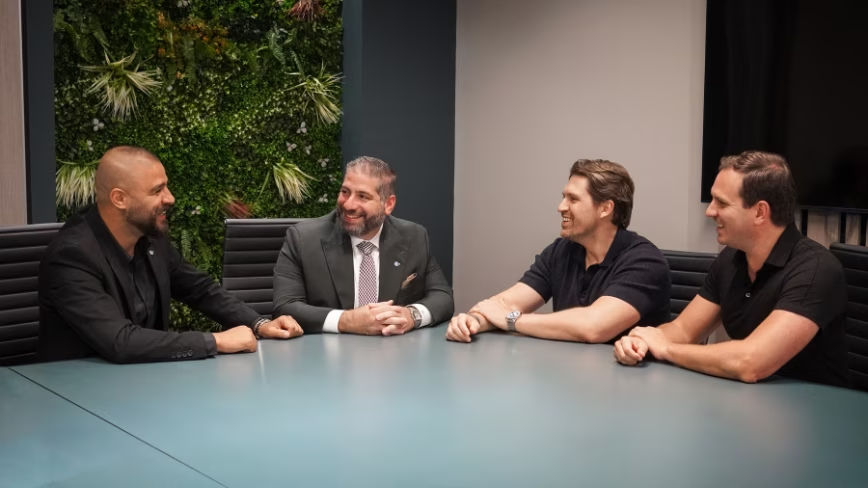
The company, founded by Christopher Pail and Christoffer Wilhelmsen and headquartered at Ras Al Khaimah's Innovation City free zone, spent two years building before raising. The founders contributed $2.5m of their own capital, assembled a team of more than 20 engineers and shipped a proprietary C++ engine that the company describes as AAA-grade.
A 6,000-person creator waitlist has signed up for beta access. Senior leadership includes alumni of Disney Gaming, the company said.
The product pitch is that SPARQ handles the production scaffolding, code, assets, networking, multi-platform publishing and monetisation, while the creator keeps control of the design itself. It is positioned not as a prompt-to-game toy of the kind that has proliferated over the past year but as a real engine intended for shippable titles. The market it wants to enter is competitive.
Roblox has aggressively pushed agentic AI tools into its existing creator base, allowing the assistant to plan, build and self-test games. Epic's Unreal Engine remains the production-grade default.
A handful of third-party tools, including Lemonade and BloxBot, are already pulling toward the same low-code-creator audience SPARQ is targeting.
The company's framing also contains one figure that does not match the underlying industry data. The press release cites a $300bn gaming market; Newzoo, the standard reference for global games revenue, currently estimates the 2026 market at $205bn, up from $188.8bn in 2025.
The $300bn figure may include hardware, peripherals or ancillary spending, but the underlying global games-software market is closer to $200bn.
SPARQ's positioning is unchanged either way: the addressable creator base is large and the gap between content-creator tooling and game-creator tooling is genuine.
The UAE setting is itself part of the story. Innovation City, formerly known as the RAK Digital Assets Oasis, was relaunched in late 2025 under chief executive Paul Dawalibi as what it describes as the world's first AI-powered free zone.
The zone has been actively recruiting frontier-technology startups across AI, gaming, Web3 and robotics, with a regulatory pitch that emphasises fast company setup and a sovereign blockchain-based business identity system. SPARQ is one of the higher-profile early commitments. The company is also building a Creators Centre studio hub in Ras Al Khaimah with Innovation City's backing.