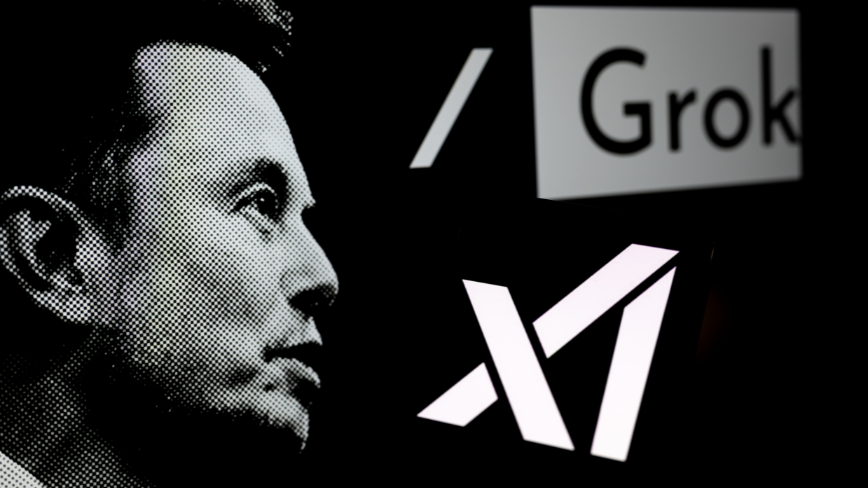
The now-public S-1 prospectus shows Musk controls roughly 79% of SpaceX's votes despite owning approximately 42% of its equity, a gap created by a dual-class share structure.
The company is targeting a June listing at a $1.75 trillion valuation, a raise of up to $75 billion, and an unusually large 30% retail investor allocation.
SpaceX's IPO prospectus, now public after the company's confidential SEC filing on 1 April 2026, confirms that Elon Musk and fellow insiders will retain dominant voting control of the company after its listing through a dual-class share structure.
Under the arrangement, Musk holds approximately 42% of SpaceX's equity but controls roughly 79% of its votes through super-voting shares that carry disproportionately higher voting rights per share.
Ordinary shares sold to public investors will carry standard voting rights, meaning buyers will gain an economic stake in the company but no meaningful ability to influence its direction.
The prospectus is the first document to give public investors a detailed look at SpaceX's financials. The company's core launch and Starlink broadband businesses generated $15 billion to $16 billion in annual revenue in 2025, with profits of approximately $8 billion.
Starlink, the satellite internet business, ended 2025 with roughly 9.2 million subscribers and more than $10 billion in revenue.
The overall $1.75 trillion target valuation implies a revenue multiple of approximately 100x, a figure that reflects investor bets on future growth across Starlink, Starship, and the xAI artificial intelligence operations rather than current financial performance.
SpaceX acquired xAI, Musk's AI startup and the parent of social media platform X, in February 2026 in an all-stock transaction that valued the combined entity at $1.25 trillion, xAI at approximately $250 billion and SpaceX at $1 trillion.
The merger fundamentally changes the IPO narrative: SpaceX is no longer purely a launch and satellite company but also an AI infrastructure play, with xAI's Grok models integrated into Starlink network management and what the company has described as an “Orbital AI Data Centers” initiative combining satellite connectivity with edge computing. The prospectus is expected to contain the first consolidated financial statements of the merged entity.
The governance structure has drawn criticism ahead of the offering. The dual-class design, common among major US technology companies including Meta and Alphabet, is being used here at a more extreme ratio than typical.
Critics note that public investors who buy SpaceX shares at what would be a record valuation would have almost no ability to challenge management decisions, replace board members, or respond to governance failures.
Former Fidelity fund manager George Noble described the structure as “the most SHAMELESS structural manipulation of a major index” in a widely shared post, arguing that the arrangement effectively turns retail investors into exit liquidity for early insiders who acquired shares at far lower private-market prices.
Donald Trump Jr, the US president's eldest son, is among the current SpaceX shareholders, holding shares through 1789 Capital, a venture firm he joined after his father's election victory.
SpaceX is targeting a June listing on the Nasdaq, targeting a raise of up to $75 billion, more than 2.5 times the $29.4 billion raised by Saudi Aramco in 2019, the current record.
The offering includes an unusual retail component: up to 30% of shares are expected to be allocated to individual investors, roughly three times the typical norm on a large IPO.
Bank of America, Goldman Sachs, JPMorgan Chase, and Morgan Stanley are acting as senior underwriters. If the offering proceeds at the $1.75 trillion valuation, SpaceX would list as one of the ten most valuable public companies on earth, behind only Nvidia, Apple, Alphabet, Microsoft, and Amazon among current S&P 500 constituents.
The prospectus is required to be public at least 15 days before SpaceX begins its investor roadshow. With a June listing target, the roadshow is expected to begin in the week of 8 June, preceded by testing-the-waters meetings with institutional investors that Reuters reported are already under way.
Whether the June target holds depends on market conditions, the Nasdaq has been volatile in recent weeks amid the US-Iran war and spiking oil prices, and IPO experts have noted that even a highly anticipated offering can struggle if market sentiment turns sharply negative in the days before pricing.