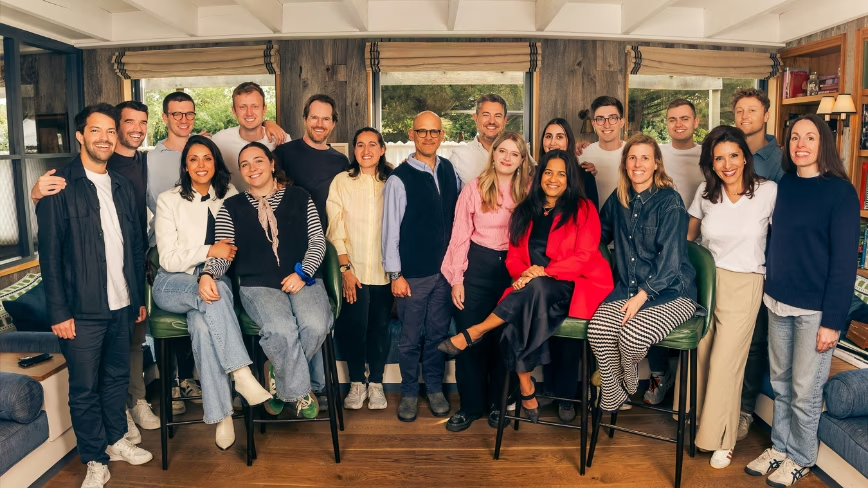
Seedcamp has spent nearly two decades writing the first cheque into companies before anyone else was sure they were worth one.
Revolut, Wise, UiPath, Synthesia, and Fluidstack all took early money from the London firm, and on Monday it said it had raised $320mn to keep doing the same thing for the next generation, with one notable addition: a bigger presence on the other side of the Atlantic.
The capital is split into two vehicles. A $220mn fund, the firm's seventh, is the flagship first-cheque vehicle that backs founders at the very beginning, before the company or even the broad theme is obvious.
A separate $100mn Select fund is built to follow the winners as they scale, putting more money into the strongest portfolio companies through Series B and beyond.
The structure lets Seedcamp keep its early-stage discipline while holding on to its best bets for longer, rather than watching later, larger investors capture the upside.
The headline strategic move is American. Seedcamp is expanding its US team to build what it calls a “transatlantic bridge,” the idea being that European founders with global ambitions should not have to relocate or wait to plug into US capital, customers, and senior commercial and technical hires.
The firm frames it as a way to help founders “think global from day one,” a pitch aimed squarely at the long-standing complaint that Europe builds good companies and then loses them, or their growth, to the US.
Seedcamp has the track record to raise on. Founded in 2007 with a first fund the firm puts at $2.5mn, it now manages over $1bn in assets.
It says Fund III has returned more than 13 times its capital to limited partners on a cash basis, and that Fund IV sits above five times its value on paper, figures the firm disclosed itself and which sit at the strong end of European venture returns. More than 80 founders it has backed have since reinvested in its funds, a sign the network compounds.
Where Fund VII points is telling. Recent investments include BioOrbit, a space-manufacturing company, the autonomous-robotics developer Sunrise Robotics, and the AI-agent firm Dust, a portfolio that signals a tilt toward AI applied to science and the physical world rather than another wave of pure software.
The firm operates with a deliberately small investment team of seven and describes its approach as collective rather than the industry's “lone wolf” model, with each partner working across the portfolio.
“The last 20 years of European tech created companies that proved Europe could win,” said Carlos Espinal, a managing partner. “The next 20 will create companies that define entire industries globally from day one.”
His co-managing partner, Reshma Sohoni, put the firm's posture more bluntly: “Ambitious founders don't want to be coddled; they want the sharpest opinion around the table when the stakes are highest.”
In an unusual move for the asset class, Seedcamp has published the LP fundraising deck it used to raise the money. What the new fund buys, in the firm's telling, is the ability to be in the room early and stay in it, on both sides of the ocean.