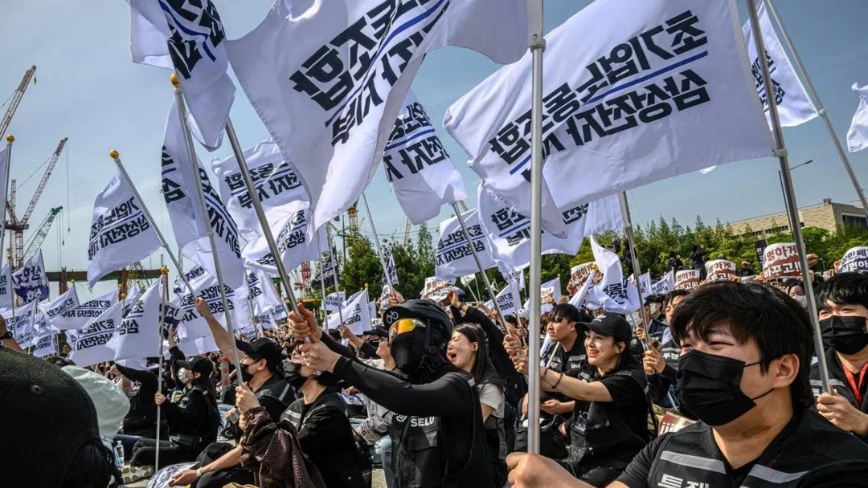
Leaked transcripts show memory-line staff offered up to 607% bonuses worth $477,000, while logic-chip employees get as little as 50%. The 45,000-person walkout, if it lands, would be the largest in semiconductor-industry history.
Samsung Electronics will pay its chip workers an average bonus of about $340,000 for the year, Bloomberg reported on Thursday, as the company tries to share out the windfall from a record AI-memory cycle and head off industrial action that could halt high-bandwidth memory production at peak demand.
The offer has not, on the available reporting, satisfied the union. The 45,000-strong National Samsung Electronics Union is preparing for an 18-day walkout that would be the largest in semiconductor-industry history.
The bonus structure is the part the leaked negotiating materials get sharpest about. Internal Samsung meeting transcripts show memory-division staff offered 607% bonuses worth roughly $477,000, while logic-chip employees on the foundry side have been told to expect as little as 50%.
The disparity reflects the underlying business: Samsung's HBM3E and HBM4 lines are running flat-out into Nvidia, AMD and hyperscaler customer demand, while the foundry book has continued to lag TSMC and remains margin-pressured.
Union representatives have called the gap a ‘retention crisis the company cannot afford', on the same transcripts.
The $340,000 average figure Bloomberg has carried is the blended-bonus number across the chip division. The worker position: the bonus is not enough.
The union is pushing for compensation closer to $1m per employee, calibrated against SK Hynix's payouts of $900,000-$1m under that company's profit-sharing structure.
The structural complaint is that Samsung's bonus is a one-time payout rather than a recurring profit-share, which exposes workers to the next downcycle while leaving the AI-cycle upside concentrated at the shareholder level.
The strike threat is unusually large. The 45,000-worker headcount inside the union represents the bulk of Samsung's Korean memory-and-logic operations.
An 18-day stoppage at the HBM lines would land directly on the production runway Nvidia, AMD and the major hyperscalers have been pricing into their second-half capex commitments.
Fortune's estimate has the stoppage potentially costing $20bn in lost output and downstream-customer exposure. Samsung's government-mediated talks have resumed inside the ten days before the walkout window, has the latest summit positioned as the final attempt to avert industrial action.
The wider Samsung-union backdrop is the part this story sits inside. Samsung's $1tn milestone and its dynasty-wealth governance structure have produced an unusually visible public-relations problem for the company across the past quarter, with the union arguing in open court and in the financial press that the AI-cycle windfall is being structurally diverted from the workers building the product.
The bonus dispute is the operational expression of that argument.
The labour-market context is sharper still. Standard Chartered's 7,000-job cut announcement earlier this week and the wider AI-driven workforce restructuring cycle have produced an environment in which highly compensated semiconductor workers are pushing simultaneously for AI-cycle profit-shares and for protection against the downcycle that AI itself is now generating in other categories.
The Gen Z commencement-day backlash against pro-AI keynote speakers is the generational expression of the same trade. The Samsung union dispute is the most expensive single labour-action proxy on that trade currently visible.
Samsung has not publicly disclosed the precise distribution of the $340,000 average, the per-line breakdown the union has been negotiating against, or the contingency production plan if the 18-day walkout lands as scheduled.
The next visible proof point will be the outcome of the government-mediated final talks, expected to conclude before the strike window opens.
The company's Q2 earnings call, scheduled for late July, will be the first public read on how the AI-memory cycle has translated into Samsung's actual reported results and on whether the bonus structure holds against next-cycle negotiations.