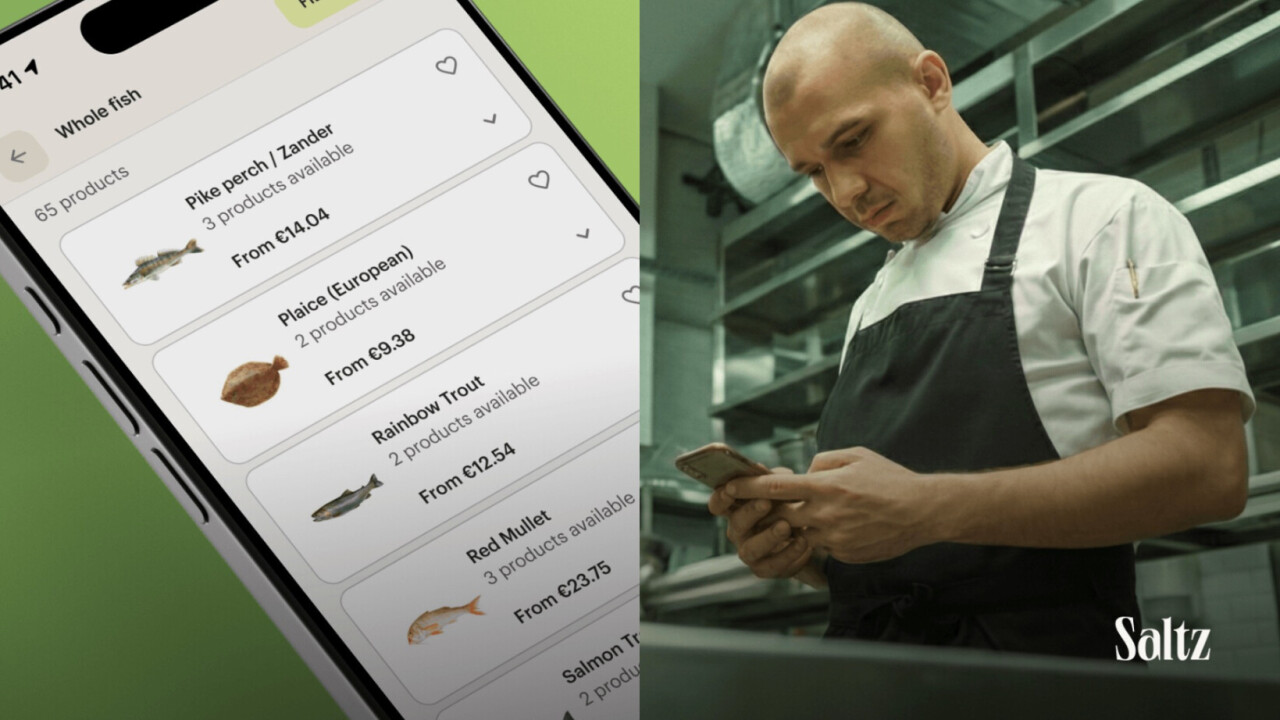
When Andrius and Tomas Šlimas sold their dropshipping platform Oberlo to Shopify in 2017, they could have sat out the next decade comfortably. Instead, after a few years inside Shopify, Andrius as Director of Product, Tomas in Marketing, the brothers went looking for the next broken industry to fix. They found it in the walk-in fridges of European restaurants.
The world Reinis Strodahs had spent two decades navigating as a restaurant supply veteran was, by any measure, a mess. Chefs at fine-dining establishments sourced produce through two or three layers of distributors, each adding markups and opacity. Paper order forms, phone calls, and supplier relationships that passed down generationally rather than through any transparent price discovery mechanism: not so much a supply chain as a series of handshake deals dressed up as logistics.
Together, the three co-founded Saltz in Vilnius in 2022, a digital marketplace that connects professional kitchens directly with food producers and verified suppliers. The pitch is simple: one platform, one interface, cross-border ordering, transparent pricing, and no middlemen. On Monday the company announced it has raised €20M in a Series A round.

The 💜 of EU tech
The latest rumblings from the EU tech scene, a story from our wise ol' founder Boris, and some questionable AI art. It's free, every week, in your inbox. Sign up now!
The round was backed by a notably credible set of investors for a Baltic startup at this stage. Institutional participants include the European Bank for Reconstruction and Development, Warsaw-based CEE venture fund Inovo, and returning seed investors Lifeline Ventures and Change Ventures. Angel participation came from Mantas Mikuckas, co-founder and former COO of Vinted, and Miki Kuusi, co-founder and CEO of Wolt, the Finnish food delivery platform acquired by DoorDash in 2022. Former Shopify executives also joined the round, bringing the founding team's existing network full circle.
co-founder Andrius Šlimas said in an announcement. “Middlemen, unclear price structures and time-consuming ordering processes often lead to inefficient supply chains and lower margins for restaurants.”
The new capital will be used to extend the platform into additional European markets, deepen the product and engineering team, and hire more than 100 people by the end of 2026, primarily across engineering, product, sales, and operations.
From Oberlo to the kitchen
The Šlimas brothers are among the better-known founders to emerge from Lithuania's small but increasingly noticed tech ecosystem. Oberlo, which they co-founded in 2015, was a Shopify-integrated dropshipping tool that grew to over $1bn in gross merchandise volume before its acquisition. The sale gave both brothers senior roles at Shopify, and, by most accounts, a clear view of what modern commerce infrastructure looks like when it works.
Saltz's third co-founder, Reinis Strodahs, brings the operational counterweight. A supply chain veteran with roughly 20 years in European restaurant logistics, Strodahs had watched the food procurement market resist digitalisation well past the point at which other sectors had modernised. The barriers are real: perishable goods, strict time windows, fragmented supplier bases across multiple countries, and logistics infrastructure that needs to coordinate pick-up and delivery at pace.
The company's approach threads those constraints with a cross-docking model, products are collected from suppliers and shipped to customers without extended warehousing, keeping delivery windows tight and produce fresher. Route optimisation is handled through third-party logistics software integrated directly into Saltz's own control systems. According to earlier company material, the platform was serving customers across five European countries at seed stage, with clients including Hilton and Marriott properties.
The structural case for a food marketplace
Restaurant procurement remains one of the more conspicuously undigitalised corners of the European economy. A typical establishment might deal with a dozen or more separate distributors for different product categories, each with its own ordering system, pricing logic, and delivery schedule. The result is not just fragmentation but opacity: without a centralised record of prices and availability, chefs often cannot compare what they're paying against market rates.
Saltz's model, a single interface where suppliers list products at transparent prices and kitchens order across borders, is conceptually similar to what Shopify did for retail merchants, or what Wolt did for restaurant delivery to consumers. The difference is the target customer: not the diner, but the person running the kitchen that serves them.
The involvement of both Kuusi and Mikuckas as angels is, in that context, more than a brand signal. Kuusi spent years building Wolt's restaurant-side relationships across Europe, and Mikuckas helped Vinted scale a marketplace model across multiple national markets. For a company whose near-term task is expanding into new geographies while managing logistics complexity, those are pertinent networks to have on the cap table.
Inovo, the Warsaw-based fund that joined the round, typically targets CEE-founded companies with cross-border ambitions, its portfolio includes Booksy, Spacelift, and Tidio. EBRD participation signals institutional confidence in the company's regional market thesis, with the development bank increasingly active in backing Baltic and CEE tech growth rounds.
With €20M and a founding team that has done this once before, Saltz is moving quickly.