Dina Gazzella is 85, and on her wrist is a small black band that looks like a watch and does rather more than tell the time. “If I feel unwell, this is a lifesaver,” she told Reuters.
In a summer that has turned lethal across Europe, that is not a figure of speech.The bracelet is part of a scheme run by Rome's municipality, which has equipped around 700 elderly residents with a wearable that monitors heart rate and sleep patterns, detects falls through motion sensors, and lets the wearer call for help in an emergency.
A team of social workers keeps watch remotely, and the device tracks movement both inside and outside the home. The city is presenting it as a health-prevention tool, and the timing is not accidental.
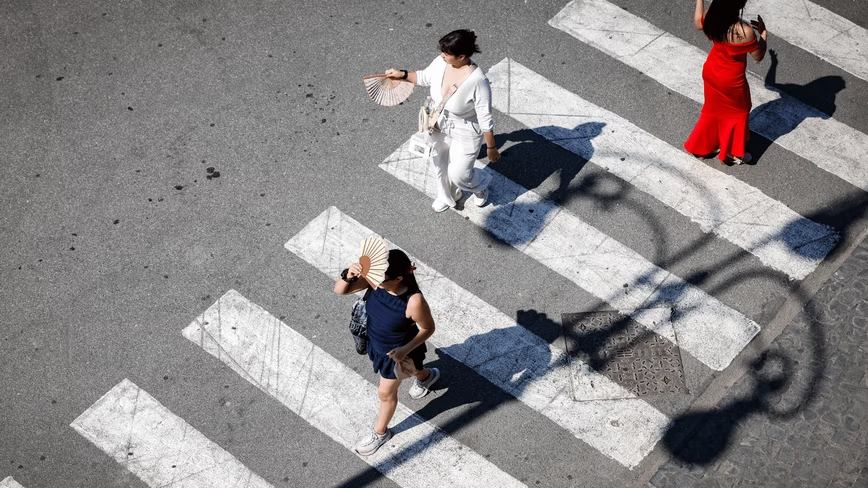
Rome has spent the past week in the upper 30s Celsius, hot enough to place it among 16 Italian cities under the health ministry's highest red heat alert, alongside Milan, Turin, and Verona.

The 💜 of EU tech
The latest rumblings from the EU tech scene, a story from our wise ol' founder Boris, and some questionable AI art. It's free, every week, in your inbox. Sign up now!
The wider picture is worse. The World Health Organisation has linked more than 1,300 deaths to the extreme heat that began on 21 June, France has reported roughly a thousand excess deaths in a single week, and Germany recorded a peak of 41.7C.
Heat kills the old before it kills anyone else, quietly and at home, which is exactly where the bracelet is meant to be looking.
The device sits inside a larger support programme the municipality introduced last year, funded with EU post-Covid money and budgeted, according to the reporting, at around €400m for elderly care.
The wearable is the visible part, but the human part is arguably the point. Social workers call beneficiaries daily to check that they have taken their medicine, to ask whether they are coping with the heat, and sometimes simply to talk to someone who might otherwise spend the day alone.
That combination, a sensor plus a phone call, is what separates the Rome scheme from a consumer fitness tracker. The technology flags the emergency; the person on the other end of the line addresses the loneliness and the missed medication that often precede it. It is a reminder that the most useful health wearables tend to be the ones wired into a service rather than left to buzz on a wrist.
It also sits at an uncomfortable intersection. A device that tracks an elderly person's movements inside and outside their home, around the clock, is a surveillance tool as much as a safety one, and some participants have reportedly left the programme over privacy worries. The concern is not paranoid.
Health data is among the most sensitive a person holds, and the broader drift toward always-on monitoring has made even well-intentioned tracking feel less benign. Rome's challenge is to reassure people that the watching is care, not control.
Behind the individual stories is a structural problem cities across the continent are only beginning to confront. Europe's population is ageing, its summers are intensifying, and heat has become one of the deadliest climate-related risks it faces, which is why cooling and heat resilience have moved from niche concerns to civic priorities.
A bracelet does not cool a flat or fix a city built for milder weather. What it does is make the most vulnerable residents visible to someone who can act before a hot afternoon becomes a fatality.
For Gazzella, the calculation is simpler than any of that. The band on her wrist means that if she falls, or her heart races, or she simply cannot manage the heat, somebody will know. In a Roman summer that has already proved how fast that can matter, it is a modest piece of technology doing a quietly enormous job.