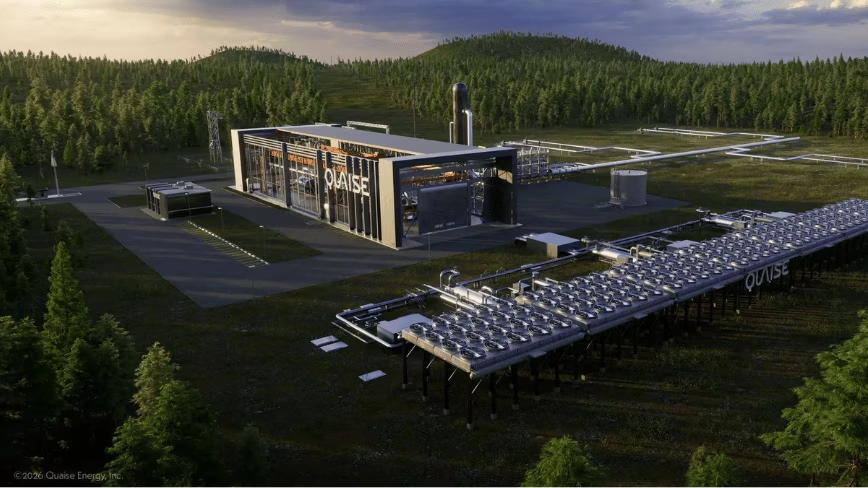
Geothermal used to mean shallow wells and modest heat. Quaise wants to drill kilometres down and blast the rock with microwaves, and it just raised $134 million to try.
Quaise Energy has raised $134 million to drill for superhot rock deep underground, Bloomberg reports. Prelude Ventures led the first close of the Series B, the company said, with Japanese energy giants JERA and Idemitsu also joining. The round takes Quaise's total funding to $230 million.
Microwaves instead of drill bits
The pitch rests on one unusual idea. To reach rock hot enough, between 300C and 500C, Quaise must drill far deeper than today's geothermal wells. Past a certain point it swaps the drill bit for an energy beam and uses microwaves to vaporise the rock.
The technology grew out of more than a decade of research at MIT. The goal is more heat from fewer wells. Deeper, hotter rock yields more energy per hole, and skipping worn-out bits cuts downtime and cost. Founded in 2018, Quaise says this can finally make geothermal cheap.
Chasing the data-centre boom

The 💜 of EU tech
The latest rumblings from the EU tech scene, a story from our wise ol' founder Boris, and some questionable AI art. It's free, every week, in your inbox. Sign up now!
Timing is the other half of the story. Reliable, always-on clean power is suddenly in huge demand, thanks to the hungry AI data centres sprouting across the grid. The proceeds will fund Project Obsidian in Oregon, which Quaise calls the world's first commercial superhot geothermal plant. It aims to send first power to the grid by 2030.
Quaise has already signed a hyperscaler for the first 50 megawatts of the project, though CEO Carlos Araque would not name the customer.
Demand like that has revived a written-off sector. In May, geothermal developer Fervo Energy raised almost $1.9 billion in a US listing that priced above range. Investors are also pouring money into fusion, next-generation reactors, and the wider rush of cash into AI-adjacent energy.
Why it matters
The engineering is still unproven at commercial scale. At its Texas test site, Quaise is nearing one kilometre of depth, the deepest yet for its drilling method. It must reach beyond five kilometres to tap the hottest rock.
The money buys time, not certainty. Quaise plans a Series C next, then, following Fervo, a stock-market listing. Rivals such as Mazama Energy are drilling near the same Oregon volcano. Whether microwaves can crack rock, and costs, faster than the field is the test that counts. Cheap, always-on power is the prize.