TL;DR
A California judge granted a 14-day TRO on the $110B Paramount-WBD merger after 12 state AGs sued. Paramount planned to close July 22. A $650M/quarter ticking fee starts October.
Paramount and Warner Bros merger blocked by temporary restraining order one day before close
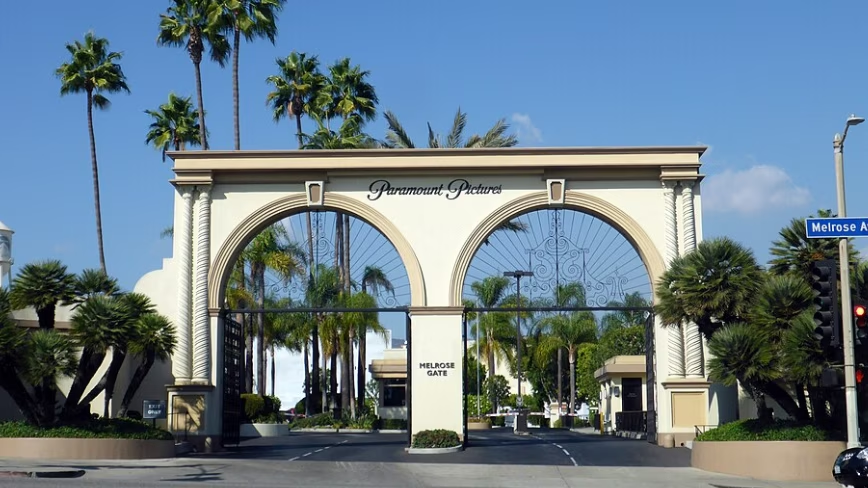
A California judge granted a 14-day TRO on the $110B Paramount-WBD merger after 12 state AGs sued. Paramount planned to close July 22. A $650M/quarter ticking fee starts October.
California District Judge Araceli Martínez-Olguín granted a temporary restraining order on the $110 billion Paramount-Warner Bros. Discovery merger on Monday, pausing the deal for 14 days. The order came after a coalition of 12 state attorneys general led by California's Rob Bonta sued to block the acquisition last week, arguing it would violate the Clayton Antitrust Act. The judge said the states presented “compelling evidence that the combined firm resulting from the transaction will possess substantial market share in the wide-release theatrical distribution market.”
Paramount had planned to close the deal as early as July 22, when it expected all regulatory clearances to be in hand. The US Department of Justice cleared the merger in June, but the state-level lawsuit opened a second front. The proposed deal would unite Paramount and Warner Bros. film studios, the CBS broadcast network, pay TV networks including CNN, TNT, MTV, and BET, and streaming services Paramount+ and HBO Max under one roof. The states argue the merged entity would control nearly a third of US films and a third of basic cable programming.
The clock is expensive. If the deal is not closed by September 30, a ticking fee kicks in: an additional 25 cents per share per quarter paid to WBD shareholders, worth roughly $650 million in cash per quarter. Paramount also agreed to a $7 billion breakup fee if the deal collapses due to regulatory concerns. The states could seek another TRO after the 14 days or pursue a preliminary injunction, which would delay the deal further. TNW reported last week that Paramount said it would take the merger to the Supreme Court if states succeeded in blocking it.
Paramount called the restraining order “one of the weakest merger challenges in modern antitrust history” and argued the deal would stabilise basic cable television, increase theatrical releases, and create jobs in film production. Bonta called it unlawful. Netflix paid $587 million for an AI filmmaking startup and is using AI on 300 productions, illustrating the competitive pressure that Paramount and WBD argue makes consolidation necessary. Whether the judge agrees will depend on whether 14 days becomes 14 months.