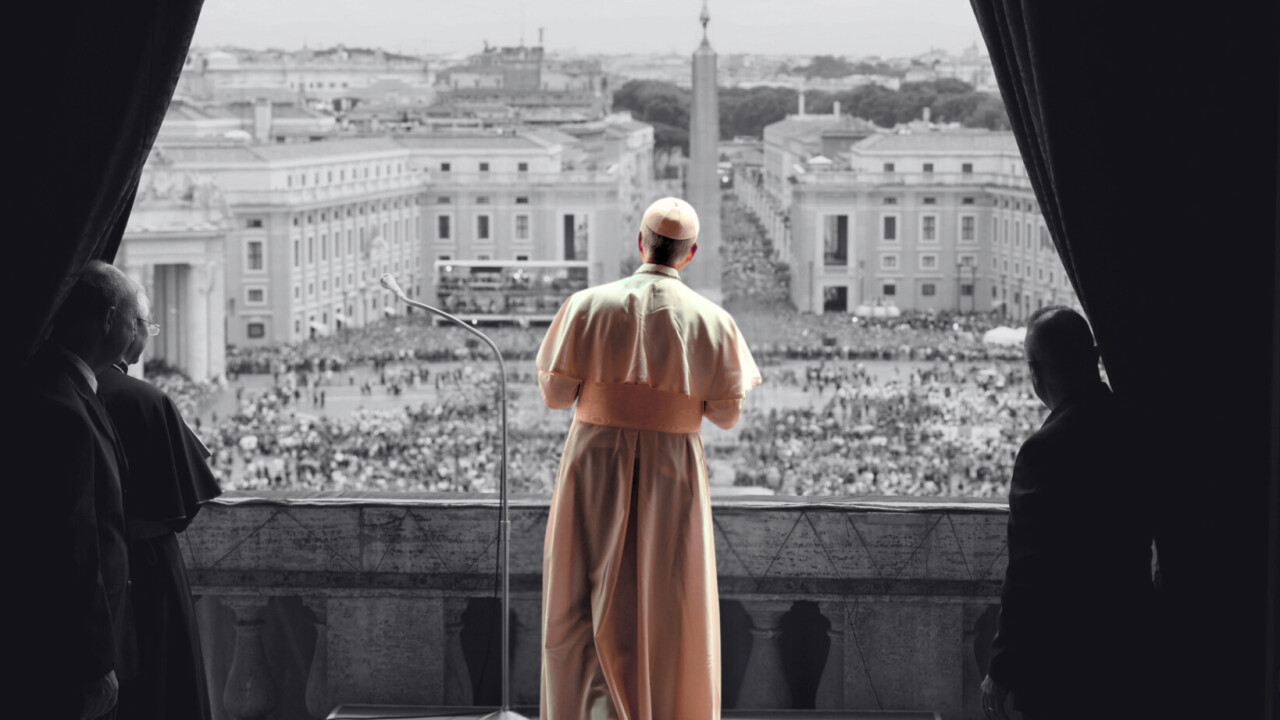
If there is something I never expected to read, it was the Pope's opinion on artificial intelligence and its use within the Church. So when Pope Leo XIV advised priests of his diocese not to outsource homilies to artificial intelligence, the instruction read almost like a parish bulletin caught between two worlds. Except it wasn't a parish bulletin.
It was the leader of the world's oldest continuously operating institution drawing a line in the sand between human faith and machine output, and doing so with a sermon that might as well have been delivered in the language of a startup pitch.
From an initial impression, this directive appears straightforward: don't let a chatbot draft your Sunday reflections. Vatican News reported the Pope's words as pastoral guidance delivered in dialogue with clergy of the Diocese of Rome, warning against the temptation “to prepare homilies with artificial intelligence,” and reminding priests that human intelligence needs exercise.
Still, beneath the surface of that neutral reporting, there is a sharper tension: this isn't merely about word-counting in Latin, Italian, or English. It's about in an age where algorithms pretend to understand everything from physics to piety.
At the core of the Vatican's position is theological anthropology: AI, the Pope insists, “will never be able to share faith.” This is more than a pastoral preference; it is a categorical rejection of the notion that a non-sentient system can participate in the experiential and spiritual transmission of belief.

The 💜 of EU tech
The latest rumblings from the EU tech scene, a story from our wise ol' founder Boris, and some questionable AI art. It's free, every week, in your inbox. Sign up now!
This position is not absurd on its face. Within Catholic theology, faith is not information alone; it is relational, incarnational, and communal. A homily is more than rhetoric.
It is an act of presence, someone speaking from their own spiritual journey, their own wrestling with doubt and hope, to a congregation. That dynamic cannot be reduced to pattern prediction and prompt engineering.
But here's the curious part: the Vatican is not technologically Luddite. The Church recently embraced AI-powered tools to translate liturgical texts into as many as 60 languages in real time, an acknowledgment that machine-assisted communication can serve the global mission.
Yet in the very next breath, it draws an oddly narrow line: the machine may interpret language, but it may not inspire worship.
So the question begs itself: is this a theological conviction, or institutional self-preservation?
Tradition, that vast reserve of rites, councils, and codified practice, does not respond well to disruption. The Church absorbed seismic shifts in the past: the printing press, radio, television, and well into the internet age. Its decree from the Second Vatican Council addressed new communications media not with a rejection but with a call to engage wisely.
The recent papal ban on AI-generated homilies, by contrast, feels reactive. It feels like an attempt to contain a phenomenon that is not just unfamiliar but : algorithms assuming roles once held by called voices and trained hearts.
What's striking, and ironically modern, is the fear beneath the phrasing. The Pope is not simply saying “keep AI out of pastoral care.” He is also warning against the cult of metrics, the belief that accruing likes and followers on social media has spiritual merit. The ecclesial concern about vanity is age-old, but couching it in terms of TikTok popularity is very 21st-century.
In this sense, the discourse feels less like moral theology and more like institutional self-awareness. The Church is observing the velocity of AI and internet culture in real time, and it does not want its ministers to be mistaken about what constitutes a
The Pope's declaration that AI “will never be able to share faith” is at once a robust affirmation of human uniqueness and a revealing expression of deeper anxiety about what AI do. If AI continues to advance, and there is little reason to believe it will not, it will increasingly sit at the intersection of knowledge, language, and what feels like relational mimicry.
AI might not have faith, but it may soon simulate a version of faith that feels compelling to many. There are already AI-generated sermons, papal deepfakes, and entire social feeds devoted to misattributed spiritual wisdom.
The Church's reluctance is not merely doctrinal prudence; it is a pre-emptive defense against misinformation masquerading as revelation. Discerning versus algorithmic guesswork may become one of the main ethical challenges of this century. The Vatican's current language, that AI “will never be able to share faith,” functions less as a bridge and more as a barricade.
Christianity and the Machine equals an uneasy coexistence
To ask how it is for AI to enter sacred spaces is to conflate two distinct questions: And should On the latter, the Church's answer is clear: no.
But its reluctance also reveals a deeper unease about how authority is constructed in a culture where people sometimes trust machines more readily than institutions, and perhaps even more than each other.
Christianity, after all, is not about information delivery; it is about incarnation, God taking flesh, not data. Theologically, AI cannot in that narrative because it lacks consciousness, interiority, capacity for moral judgment, or the depth of existential encounter that defines faith.
There is a historical paradox here. The Church was once at the forefront of literacy, scriptoria, and the preservation of knowledge. Monastic communities were medieval technology hubs. And now the institution that once preserved texts worries about an emergent tool that could democratize access to many of those same texts and insights it guards.
This context is important because the Vatican's broader engagement with AI is not a simple rejection. In its doctrinal note , the Church explored the ethical and anthropological challenges posed by AI, insisting that artificial systems should complement human intelligence rather than replace it, uphold human dignity, and promote the integral development of the human person.
Still, when the Church says “no” to AI homilies, what it is really saying is: This is a defensible theological claim. But it also looks, uncomfortably, like an attempt to keep within an institution shaped for a world without the internet.
The real challenge for Christianity in the AI era will not be whether robots can preach sermons. It will be whether humans, shaped by screens, social media, and algorithmic suggestion, remain capable of discerning what is real in their search for hope, connection, and transcendence.
In that sense, even the Vatican seems to recognize that the struggle is not , but keeping faith alive in a world where certainty is a luxury and meaning is negotiable. In an age where technology threatens to smooth over interiority, the Church's refusal to delegate what is essentially human, the act of bearing witness, is not just theological resistance.
It is a reminder that faith is not a commodity and cannot be manufactured. However compelling the simulation, what matters is not what the machine can produce, but what humans choose to give and receive as a genuine encounter.