TL;DR
JD Power's 2026 APEAL study found EV owners rate their cars higher than gas car owners in nearly every category measured
EV owners are happier with their cars than gas car drivers JD Power finds
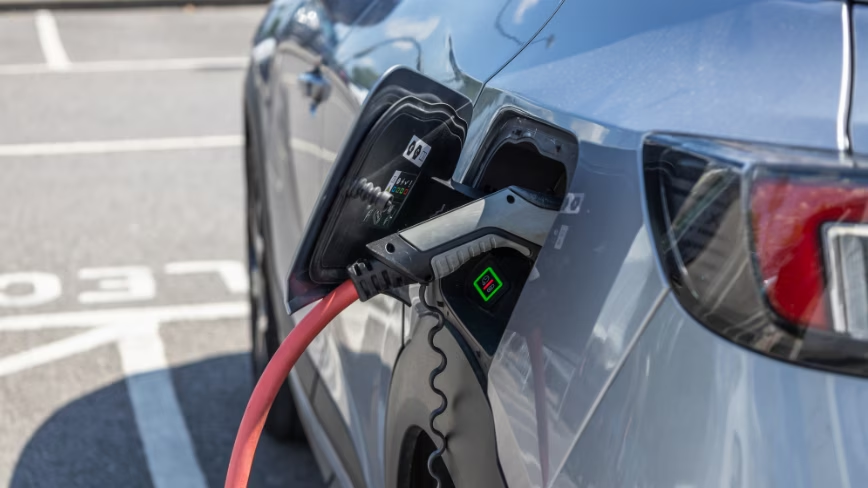
JD Power's 2026 APEAL study found EV owners rate their cars higher than gas car owners in nearly every category measured
Electric vehicle owners are happier with their cars than drivers of combustion vehicles in nearly every category measured, according to JD Power's 2026 Automotive Performance, Execution, and Layout study released this week. The survey of 78,514 owners of 2026 model-year vehicles found that EVs outscored internal combustion engine cars by 109 points on a 1,000-point scale in powertrain satisfaction alone, the largest gap of any category in the study. Overall new-vehicle satisfaction reached 858 points, up seven points year over year, the biggest single-year improvement since 2018.
EVs also posted the largest year-over-year improvement of any powertrain type, gaining 22 points compared with the prior year. The jump comes as the vehicles themselves have materially improved, with NACS charging ports replacing adapters across most new models, heat pumps becoming standard on more trims, and several manufacturers adding meaningful range through updated battery chemistry. JD Power asks owners about 37 attributes covering everything from the comfort of the driver's seat to the feeling of stepping on the accelerator, and EVs led or matched combustion vehicles on the majority of them.
The satisfaction data contradicts the narrative that mainstream buyers are souring on EVs. Early adopters tend to be more forgiving of shortcomings like sparse charging infrastructure, so expanding the buyer pool might have been expected to drag scores down. Instead, even first-time EV buyers reported high levels of satisfaction, suggesting that the barriers to EV adoption are increasingly about price and policy rather than the ownership experience itself.

The 💜 of EU tech
The latest rumblings from the EU tech scene, a story from our wise ol' founder Boris, and some questionable AI art. It's free, every week, in your inbox. Sign up now!
A separate CDK Global study released this year reinforced the pattern, finding that 90 percent of current EV owners plan to buy another electric vehicle and that 73 percent say their household will always own at least one EV. Only one percent said they expect to return exclusively to petrol-powered vehicles. The loyalty figures have climbed steadily, up from 82 percent a year earlier, as the ownership experience improves and the used EV market gives buyers a lower-cost entry point.
The disconnect between satisfaction and sales remains the defining tension in the American EV market. More than a dozen EV models have been discontinued in the US this year as tariffs, the loss of the federal tax credit, and weakening demand reshaped the economics of selling electric cars. The people who own EVs overwhelmingly like them, but the people who do not own them are buying fewer of them, and the policy environment is making it harder for automakers to close that gap.