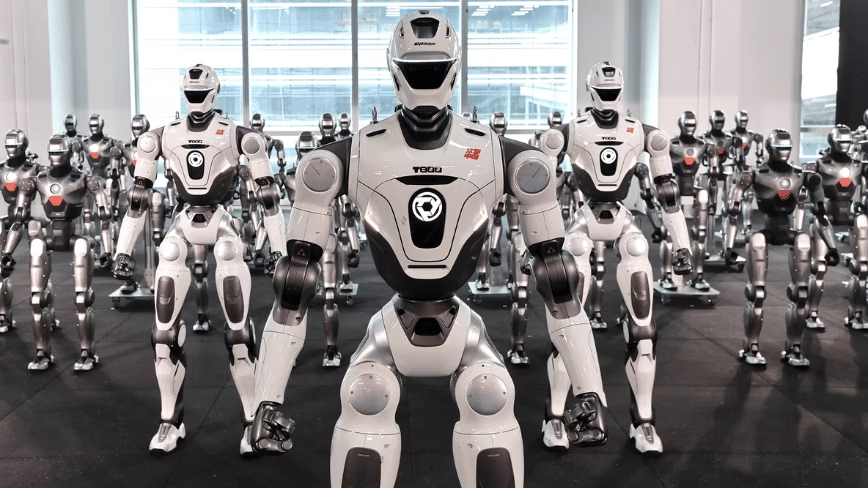
Hyundai workers have voted overwhelmingly to authorise a strike, and for the first time robots are part of the fight. A Hyundai robot strike would test who controls the factory floor as humanoid machines arrive.
South Korea's largest carmaker is heading for a clash over robots. Hyundai's union has voted to authorise a strike, partly over fears that machines will replace its members, the Financial Times reported. The workers want a say in how AI and automation reach the line.
The vote was lopsided. Of the union's 39,668 members, 92% backed strike action, after 11 rounds of wage talks stalled. The union has not yet called a walkout. But the mandate now sits in its hands.
It is a big number from a big union. Hyundai counts as one of South Korea's largest private employers, and its Ulsan complex ranks among the biggest car factories on Earth. When this union moves, the whole country notices.
A familiar fight, with a new front
Much of the dispute looks traditional. The union wants a bigger performance bonus, a higher base wage and a later retirement age. Korean carmakers face versions of this most years.
But the backdrop has hardened. South Korea's car industry faces tariffs, slower demand and fierce Chinese competition. Management wants flexibility. Workers want security. Robots have turned that standoff sharper.
One demand is new. The union wants guarantees on jobs and working conditions as Hyundai adds AI and robots. That issue never appeared in past wage rounds. This time it sits at the centre of the table.
The robot that spooked the line
The trigger has a name: Atlas. Hyundai controls Boston Dynamics, the US firm behind the humanoid robot, and the two unveiled Atlas's factory ambitions at CES in January. The machine sent a jolt through the industry.
Hyundai is not dabbling. It bought a controlling stake in Boston Dynamics in 2021, and has pushed the firm hard toward the factory. The latest Atlas can lift loads of around 100 pounds and work long shifts. On paper, it suits exactly the jobs Hyundai's members do today.
The numbers explain the worry. Hyundai plans to build up to 30,000 Atlas units a year by 2028, with more than 25,000 bound for its own Hyundai and Kia plants. Production starts at a new robot factory in Savannah, Georgia.
The company frames it gently. Atlas will first take on dangerous, dull and physically tough jobs, such as parts sequencing, before moving into assembly. Workers hear something blunter. The Korean Metal Workers' Union notes that each robot will cost less than two years of a worker's wage, which reads less like a helper and more like a replacement.
That gap, between the company's framing and the union's, captures the whole dispute. Hyundai talks about safety and labour shortages. The union talks about jobs and bargaining power. Both describe the same machine.
“Not a single robot without a union”
The union has drawn a hard line. “Not a single humanoid robot will be allowed on the production lines without a labour-management agreement,” it said. It wants a veto, not a briefing.
That demand reframes the whole debate. The fight is no longer only about pay. It is about who decides when a machine takes a human's task. Hyundai wants to deploy on its own timetable. The union wants a seat at that decision.
The union also has leverage. Hyundai's workers have walked out before, and a strike here can halt thousands of vehicles a day. That power is exactly why the robot demand lands hard. The company cannot simply wait it out.
A test for Korea
This lands in a country already rethinking the deal between labour and technology. Samsung's unions have grown bolder, and the Samsung pay settlement marked a shift in how Korean workers bargain. Hyundai's robot clash pushes that further.
Politicians are watching. South Korea's government has argued that the gains from AI must reach the public, not just shareholders. A strike over robots at the country's biggest carmaker turns that slogan into a real-world test.
There is a demographic edge to all of this. South Korea is ageing fast, and carmakers argue robots will plug labour gaps that humans will not fill. The union does not buy a pure shortage story. It sees a company eager to cut costs, dressed up as future-proofing.
The fight everyone is heading for
Hyundai is early, not alone. Across Asia, factories are racing to add humanoid robots, from China's smartphone makers retooling for robotics to logistics giants. JD.com has said robots will eventually replace its couriers. The same question follows each one: what happens to the people?
The scale is what is new. Earlier automation bolted fixed arms to a line. Humanoids move anywhere and vendors pitch them to do almost any manual job. That is why a parts-sequencing robot today reads, to a worker, as an assembly robot tomorrow.
For now, the robots mostly do tasks humans dislike. The anxiety is about the next step, when they start doing tasks humans depend on for a wage. Hyundai's union is trying to write the rules before anyone crosses that line.
What happens next
The immediate path runs through mediation. The union and Hyundai were due to meet the country's labour relations commission this week, and the union will choose its next move from there. A strike is possible, but not certain.
Hyundai, for its part, insists robots will support workers rather than supplant them. It points to the dangerous tasks Atlas will take on first. The union's answer is simple: a promise is not a contract. It wants the guarantee in writing, the same way it wants its bonus in writing.
The deeper issue will outlast this round. Hyundai still plans its robot army, and 2028 is close. The strike vote does not stop that. It does force a question the whole industry has dodged: when a robot can do the job, who gets to say yes? At Hyundai, the workers just demanded the right to answer.