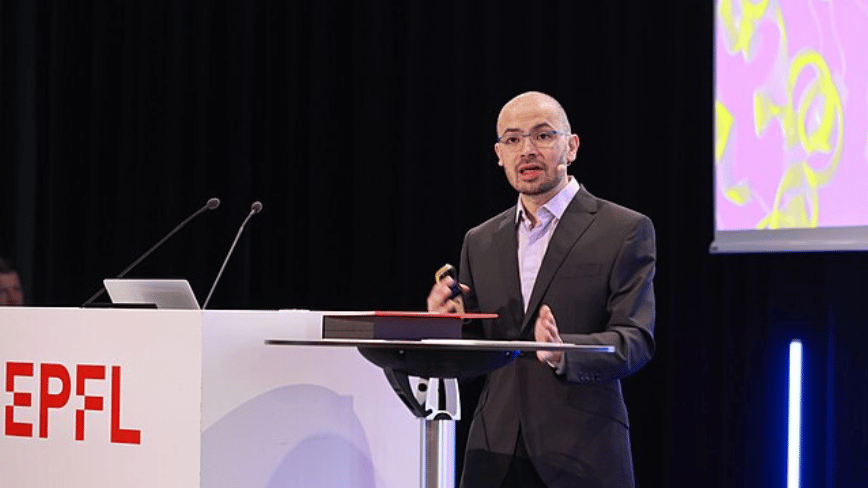
In short: Demis Hassabis, speaking on the 20VC podcast with Harry Stebbings in early April 2026, described how Google DeepMind has accelerated its pace over the past two to three years by merging Google Brain's compute resources with DeepMind's research culture and returning to what he called a “startup or entrepreneurial” way of working. He also disclosed that he runs Isomorphic Labs, the group's pharmaceutical AI spinoff, as a “second workday” beginning around 10pm, ahead of expected human trials in oncology later this year.
Assembling the ingredients
Google DeepMind's formal merger of DeepMind and Google Brain completed in 2023. Hassabis described the period since as one of deliberate acceleration: aligning talent “from around the company, sort of pushing in one direction,” gaining access to the compute infrastructure that DeepMind had previously lacked at scale, and driving what he called “relentless sort of focus and pace.” In his characterisation, the transformation required a cultural adjustment as much as a structural one: the organisation had to “come back to almost our startup or entrepreneurial roots and be scrappier, be faster, ship things really quickly.” The current competitive environment, he said, was “ferocious.” Veteran employees with careers of 20 and 30 years were telling him it was “the most intense environment they've ever seen, perhaps ever in the technology industry.”
Hassabis said he speaks to Sundar Pichai, Alphabet's chief executive, “every day,” reflecting the degree to which Google DeepMind now operates at the operational centre of Alphabet's product and research strategy. That proximity is matched by a capital commitment of corresponding scale. Google's compute build-out, developed in part through its custom chip partnerships with companies including Broadcom, is central to that positioning: Alphabet spent $91.4 billion on capital expenditure in 2025 and has guided for between $175 billion and $185 billion in 2026, a near-doubling, with supply constraints rather than capital availability described as the primary limiting factor.
The 90% claim
One of Hassabis's more assertive statements in the podcast concerned DeepMind's contribution to the history of AI. He said approximately 90% of the breakthroughs underpinning the modern AI industry were produced by either Google Brain, Google Research, or DeepMind. The claim is broadly consistent with the academic record on foundational developments, including the transformer architecture produced by Google Brain in 2017, early work on reinforcement learning from human feedback, and deep reinforcement learning techniques developed at DeepMind. The 2024 Nobel Prize in Chemistry, awarded to Hassabis and John Jumper and shared with David Baker, for the AlphaFold protein-folding system is the most formally recognised of those achievements. Whether 90% is accurate as a proportion is a matter of interpretation, and the industry has pluralised substantially since those foundational papers. The framing functions as a positioning statement as much as a historical claim.
The operational consequence of that legacy is a product release cadence that has accelerated sharply. Google's open-weight model programme, most recently Gemma 4, now releases models built from the same research and training infrastructure as Gemini 3, closing a gap between frontier research and open-source contributions that previously existed. Gemini reached approximately 750 million monthly active users by the end of the fourth quarter of 2025, with Gemini 3 described in secondary reporting as having prompted an urgent internal response at OpenAI on its release in November of that year.
The second workday
Alongside leading Google DeepMind, Hassabis also runs Isomorphic Labs, the pharmaceutical AI spinoff that DeepMind established in 2021. He described his working arrangement in the 20VC conversation: a first workday at DeepMind, followed by a “second workday” beginning around 10pm dedicated to Isomorphic's drug discovery programme. The dual commitment reflects a conviction that applying AI to drug discovery is both Hassabis's most important long-term ambition and a project that requires sustained personal involvement rather than delegation.
Isomorphic raised $600 million in April 2025 and has existing partnership agreements with Eli Lilly and Novartis with combined milestone values of up to $3 billion. In February 2026, the company released IsoDDE, a drug design tool that Isomorphic says doubles the accuracy of AlphaFold 3 for generating drug candidates. Human clinical trials in oncology are expected later in 2026. The competitive dynamics in AI-driven drug discovery are intensifying across the industry: Anthropic's acquisition of Coefficient Bio for approximately $400 million in April 2026, a stealth startup founded by former Genentech computational biology researchers, signals that general-purpose AI companies are now treating pharmaceutical discovery as a product category, not merely a demonstration of model capability.
The competitive framing
The 20VC podcast conversation, like Sebastian Mallaby's biography of Hassabis, “The Infinity Machine,” published on 31 March 2026 and based on more than 30 hours of interviews, presents a researcher who has moved into the most commercially urgent phase of his career with a consistent thesis: that the most important research and the most important products are not separate activities, and that the organisation capable of doing both simultaneously at frontier scale will determine the shape of the industry. The year 2025 consolidated AI as a central strategic priority across the technology industry, with capital, talent, and institutional structure all reorganised around the question of pace. For Hassabis, the answer has been to bring the speed of a startup inside the resource base of one of the world's largest technology companies, and to treat that combination as a durable advantage.
The scale of the capital flowing into the field makes that advantage harder to sustain. SoftBank's $40 billion bridge loan to OpenAI represents a form of capitalisation that even Alphabet's compute commitments cannot trivially match in kind. Hassabis's account of a “ferocious” competitive environment is not rhetorical: it is a structural description of a race in which the resources of incumbents and the ambitions of challengers have converged to a point where institutional inertia is not merely a disadvantage but a disqualifying one. The startup mentality he describes at Google DeepMind is, in that context, a necessity rather than a preference.