TL;DR
French PM Sebastien Lecornu announced a bill, due at the Council of Ministers in late July, to triple penalties for producing false content during elections, extend an emergency content-takedown procedure to local elections, and create a permanent “public information commission.” He framed it as a defence against AI-driven manipulation and foreign interference ahead of the presidential campaign. Critics raise the perennial free-speech question of who decides what is false.
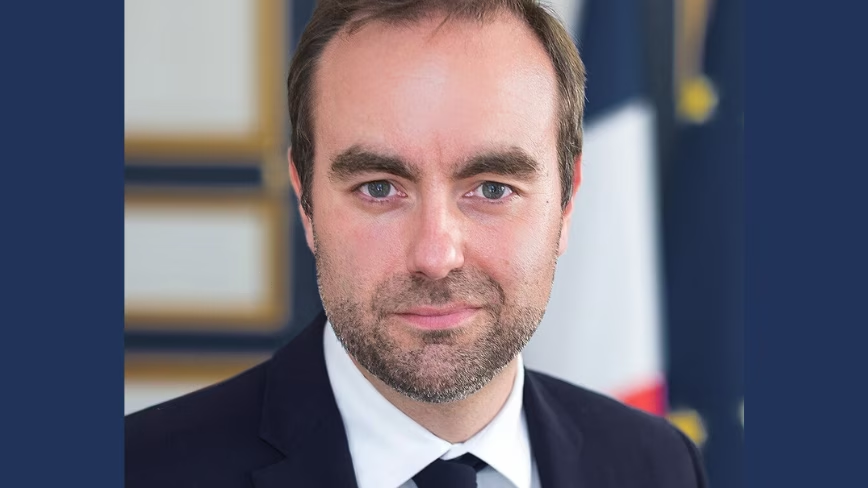
French prime minister Sébastien Lecornu has announced a bill to sharply increase penalties for spreading false content during elections. He set out the plan in the Senate on 8 July, according to Public Sénat, in response to a question about AI in the coming presidential campaign.
Lecornu argued that current penalties are “not sufficiently deterrent”. He said he would propose tripling the sentences for producing false information content during electoral periods, which he called a “sacred” time for democracy.
The government frames the move as a defence against foreign interference and AI-generated manipulation. Senator Claude Malhuret, whose question prompted the reply, warned of doctored videos, fake voices, invented characters, and bot-driven viral lies in the next campaign.
The bill is due at the Council of Ministers in late July. Lecornu described it as a “very short” text, built partly on written contributions from across the political spectrum.
What the bill would actually do
Beyond stiffer penalties, Lecornu proposed extending an emergency judicial procedure that can order false content taken down. It currently applies to presidential, legislative, and senatorial votes, and he wants it widened to all local elections.
He also backed creating a permanent “public information commission” by decree. He described it as an alert body for the press, judges, and citizens when interference is detected, rather than a censor.
The plan builds on France's existing 2018 law against the manipulation of information, which already targets electoral disinformation. It sits alongside EU-wide rules, including the Digital Services Act's content-moderation regime.
The line between protection and control
The concern deepfakes create is real, as researchers have shown that synthetic media can fool even sceptical viewers. Platforms and governments have scrambled to respond, from Meta's election-disinformation task forces to the wave of legislation that followed incidents like the Taylor Swift deepfake deluge.
Critics counter with an old objection to fake-news laws, namely who gets to define what is false. Free-speech advocates warn that vague standards and state-appointed bodies risk chilling legitimate speech, especially during the charged weeks of a campaign.
France is not new to this tension, having previously ordered platforms to pull extremist content within an hour, a rule later curbed by its constitutional court. That history is a reminder that content laws in France often meet judicial limits.
For now this is an announcement, not a statute, and the detail will decide how it is judged. Whether the commission ends up a warning light or a chokepoint depends on wording France has yet to publish.