TL;DR
Dreame Technology, the world's top-selling robot vacuum maker, is considering a Hong Kong IPO as soon as next year. The company posted over 40 billion yuan in 2025 revenue and was valued at $9.6 billion in a recent pre-IPO round.
Dreame worlds top robot vacuum maker eyes Hong Kong IPO
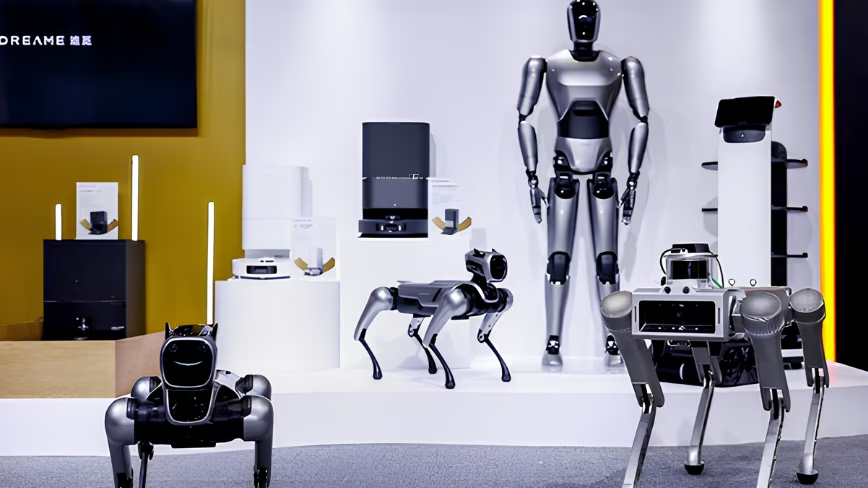
Dreame Technology, the world's top-selling robot vacuum maker, is considering a Hong Kong IPO as soon as next year. The company posted over 40 billion yuan in 2025 revenue and was valued at $9.6 billion in a recent pre-IPO round.TL;DR
Dreame Technology, a Chinese maker of robotic vacuum cleaners, lawn mowers, and pool cleaners, is considering a Hong Kong initial public offering as soon as next year, according to Bloomberg. The company is working with advisers and could raise several hundred million dollars.
The potential listing would add to a surge of Chinese tech companies choosing Hong Kong over US exchanges as geopolitical barriers tighten. Hong Kong's IPO market raised HK$109.9 billion in Q1 2026 alone, a 489% increase year on year.
Founded in 2017 with 14 million yuan in angel funding from Xiaomi and Shunwei Capital, Dreame started as part of Xiaomi's ecosystem of investee companies, manufacturing products under the Xiaomi brand. It has since outgrown that relationship.
IDC ranked Dreame the number one robot vacuum brand globally by sales and revenue in Q1 2026. It holds the top market share in 30 countries, including more than 50% in 10 of them, with particularly strong positions in Germany (42%), Belgium (62%), and Austria (49.6%).
Dreame reportedly posted more than 40 billion yuan (approximately $5.5 billion) in revenue in 2025, maintaining a compound annual growth rate exceeding 100% for eight consecutive years. Overseas markets now account for nearly 80% of total sales.
The company opened a pre-IPO funding round in 2026 at a valuation of approximately 70 billion yuan ($9.6 billion), with a target of releasing 5% to 10% of its equity. Its last major fundraise was a 3.6 billion yuan ($530 million) Series C in 2021, led by Huaxing Growth Capital and CPE Funds Management, with participation from a unit of troubled developer Country Garden.
Dreame is not content with vacuums. It announced a subsidiary called Dreame Cars in August 2025 and unveiled the Nebula 1, an electric sports car with four motors producing 1,399 kilowatts, at CES in January 2026. The company says it will be the “world's fastest car” when it debuts in 2027.
The strategy mirrors Xiaomi's own pivot into electric vehicles, which saw the smartphone maker commit $10 billion to building cars. Dreame has also announced its first smartphone, DreameSpace, which has reportedly secured more than 100 million yuan in overseas pre-sale orders.
Chinese tech companies listed in Hong Kong at more than double the rate of the previous year in 2025, with 76 mainland firms joining the exchange compared with 30 in 2024. Six Chinese AI and chip companies alone raised $3.6 billion in Hong Kong in January 2026, and AI startup MiniMax saw its shares quadruple from their January offering price.
The Hong Kong Stock Exchange launched a Technology Enterprises Channel in May 2025 to fast-track IPO approvals for specialist technology companies. Dreame had previously considered a US listing, Bloomberg reported in 2024, but US-China tensions have made Hong Kong the more practical route for Chinese hardware firms with significant mainland operations.
Deliberations are ongoing and the size, timing, and venue of any listing may change. Dreame's diversification into electric vehicles and smartphones carries significant execution risk, as the company has no track record in either category. The Nebula 1 hypercar is a concept with no confirmed production timeline or pricing.
The 40 billion yuan revenue figure and 100% compound growth rate come from Chinese media reports and have not been independently audited in public filings. One of Dreame's Series C investors, Country Garden, has since defaulted on approximately $11 billion in offshore bonds, though there is no indication this affects Dreame's operations. The broader pattern of Chinese tech companies expanding into unrelated product categories, from smartphones to humanoid robots, has drawn questions about whether the strategy stretches management attention and capital too thin.