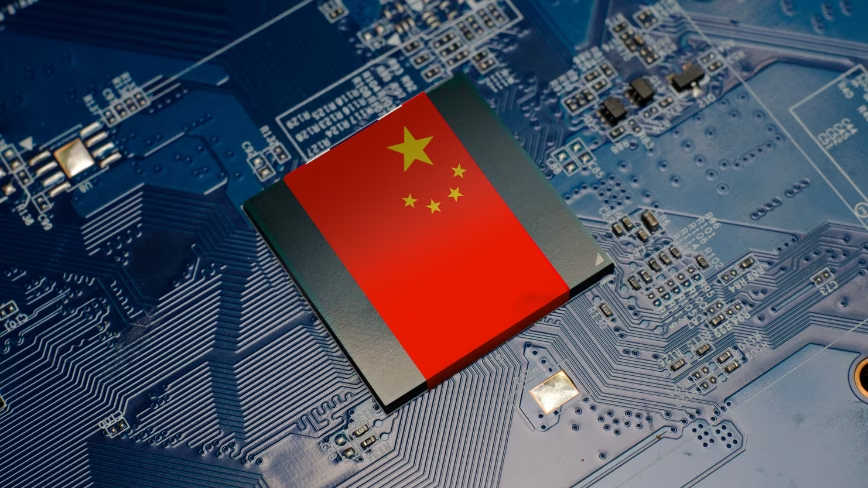
China's AI sector is not short of cash. If anything, American pressure is pumping more in.
DeepSeek shows the pattern best. The Hangzhou lab closed a $7.4bn round, the biggest first-time raise by a Chinese startup, at a valuation above $50bn. It had run for three years on founder Liang Wenfeng's own wealth and never touched outside money. The Information reports what changed his mind: Anthropic's April preview of Mythos, a model so capable it can find and exploit software flaws.
The Mythos effect
Liang concluded that matching Mythos-class models would take a far bigger war chest of data and compute. So he raised one. DeepSeek closed the round through a partnership he controls, with a five-year lockup that keeps him firmly in charge. The irony is sharp. A US campaign of export limits and model bans, aimed at slowing China, instead pushed its strongest lab to amass the largest funding pile in its history.
A unicorn every five days
The surge runs well beyond one lab. China now hosts 381 unicorns, privately held start-ups worth $1bn or more, an increase of 38 in a year, the 2026 Hurun Global Unicorn Index found. The country mints a new one every five days on average, double last year's pace. ByteDance ranks among the top three start-ups in the world. The race for AI scale increasingly has just two poles, and China holds one of them.
Robots join the rush
Humanoid robots draw the newest money. Two Chinese makers crossed unicorn status this week, with a combined valuation above $2.9bn, Bloomberg reported. AI² Robotics raised nearly 5bn yuan ($736mn). X Square Robot, backed by Alibaba, ByteDance and Meituan, closed back-to-back rounds. Each firm now tops 20bn yuan. The sector has pulled in at least 46bn yuan this year, beating all of last year, with more than 140 firms chasing what Nvidia's Jensen Huang calls “physical AI”.
Why it matters
The throughline links every figure. Washington meant its curbs to widen America's lead. The money says the opposite is happening. Chinese labs keep narrowing the gap while raising the funds to push harder. Beijing now treats firms such as DeepSeek as national projects, and investors keep writing ever larger cheques.
So the pressure has become a forcing function. Each new restriction gives China a fresh reason to spend, and the country keeps proving it can. The cash is flowing, the unicorns keep coming, and the gap keeps closing.