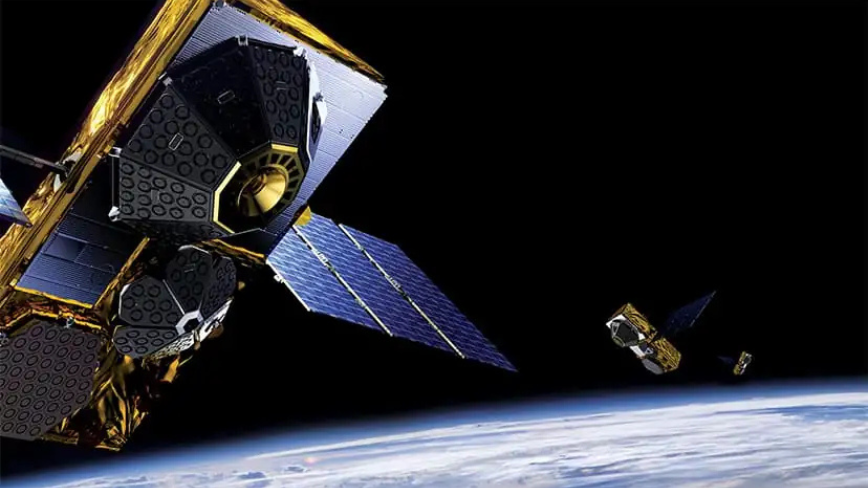
Amazon is in advanced talks to acquire satellite telecommunications group Globalstar in a deal that would value the company at approximately $9 billion, the Financial Times reported on Wednesday, citing people familiar with the matter. Reuters confirmed the report.
Both Amazon and Globalstar declined to comment, and the two sides are still negotiating the complexities of a potential deal after what the FT describes as lengthy talks. Nothing has been signed.
The strategic rationale is straightforward. Amazon is building Amazon Leo, formerly known as Project Kuiper, a planned constellation of more than 3,200 low-earth-orbit satellites designed to rival SpaceX's Starlink, the dominant player in satellite internet.
As of the time of the report, Amazon has launched more than 180 Leo satellites. Globalstar would accelerate that ambition considerably, bringing with it L-band and S-band spectrum licences, finite, strategically valuable radio frequencies that cannot simply be replicated by launching more satellites, along with decades of operational expertise and existing ground infrastructure serving enterprise, government, and consumer markets globally.
Globalstar turned profitable in 2025 and recorded $273 million in revenue.
The complication is Apple. In 2024, Apple invested $1.5 billion in Globalstar, acquiring a 20% stake in the company, in a deal that enabled Globalstar to order additional satellites and underpin Apple's Emergency SOS via Satellite feature on iPhone 14 and later models and Apple Watch Ultra.
That stake has made Amazon's negotiations considerably more complex, requiring Amazon to engage with Apple directly over the terms of any acquisition.
Apple's reliance on Globalstar's network for a core iPhone safety feature is not merely a financial stakeholder situation: it creates a genuine operational dependency that any acquirer would need to resolve.
Globalstar's shares surged following the FT's report, reaching an 18-year high in after-hours trading, driven in large part by investor recognition of the value of its spectrum holdings.
For Amazon, a successful acquisition would compress years of infrastructure development into a single transaction, providing a more immediate platform from which to challenge Starlink across individual consumers, businesses, and government customers, the same segments Starlink already serves, including US national security agencies through its Starshield variant.
Whether a deal can be structured that satisfies Apple's operational requirements while serving Amazon's competitive ambitions remains the central question.