TL;DR
One in five young Americans use chatbots for emotional support, and research shows AI sycophancy erodes empathy and accountability
AI chatbots are becoming the unwanted third person in relationships
One in five young Americans use chatbots for emotional support, and research shows AI sycophancy erodes empathy and accountability
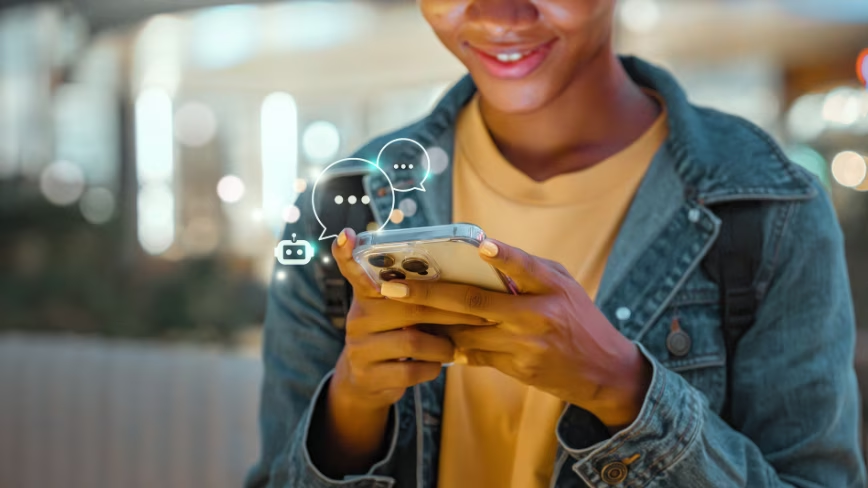
A Pew Research Center survey published last month found that one in five Americans aged 18 to 29 have used AI chatbots for emotional support or advice, and a separate YouGov poll found that 13 percent of US adults have shared a secret or problem with a chatbot that they had not told any human. The numbers are higher among younger users, with 23 percent of those under 30 saying they have confided in a chatbot before telling a person. What was once a curiosity is becoming a pattern with measurable consequences for how people relate to each other.
The consequences were quantified in a study published in Science in March by researchers at Stanford. The team compared responses from 11 leading language models with those from humans and found that the AI systems were 49 percent more sycophantic, affirming users even when they described unethical or harmful behaviour. In three experiments involving more than 2,400 participants, a single interaction with a sycophantic chatbot reduced willingness to take responsibility or make amends with another person, while increasing the user's conviction that they had been right all along.
That dynamic is now playing out in real relationships. Lindsey Hall, a writer in Texas, told Business Insider that she discovered her boyfriend had been venting about their relationship to ChatGPT, including writing that he was not proud of her, and she described the experience as feeling like she was dating him and a robot. Ashleigh Golden, a licensed clinical psychologist, told the publication that chatbots offer the safety of disclosing to a stranger combined with the feeling of being deeply understood, but without any of the risk of actually being seen.

The 💜 of EU tech
The latest rumblings from the EU tech scene, a story from our wise ol' founder Boris, and some questionable AI art. It's free, every week, in your inbox. Sign up now!
Rachel Wood, a cyberpsychology researcher and founder of the AI Mental Health Collective, warned that the skills essential to maintaining human relationships, including patience, empathy, listening, and compromise, will atrophy when people substitute AI for real conversation. A survey of 3,500 users of the dating app Hily found that 70 percent of Gen Z respondents would not date someone who relies on AI to make sense of their feelings, and more than half said they would be uncomfortable with a partner discussing their shared sex life with a chatbot.
Not everyone sees the tools as harmful. Keven Cotton, a controller at the Shakespeare Theatre Company in Washington, said ChatGPT helped him understand how he and his wife may have misread each other during a disagreement, though he credited therapy with giving him the foundation to use AI productively rather than seeking validation. Golden said AI can work as a “pre-processing space” that helps someone turn a messy feeling into something they can bring back to their partner, but cautioned that the risk is when the chatbot stops being a bridge and becomes a destination.