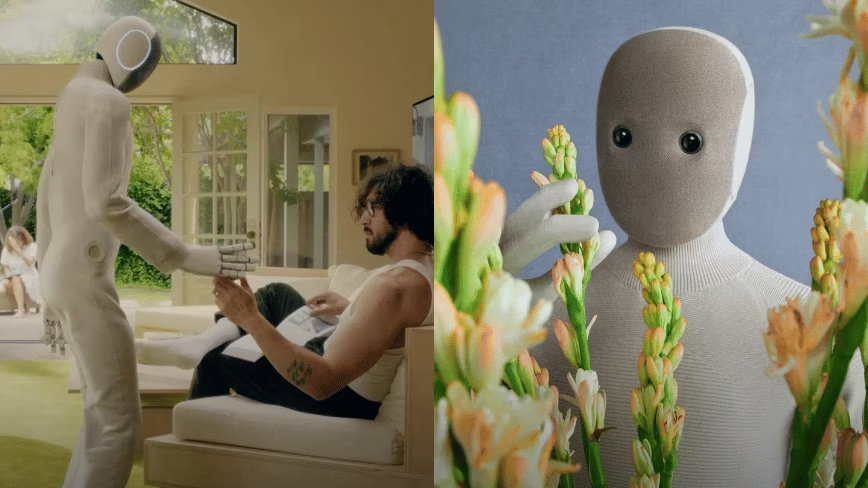
Humanoid robots learned to walk years ago. The thing still tripping them up is the hand.
1X has given its NEO home robot new hands, and they are the most interesting thing about it. A robot can stride across a stage and still be useless in a kitchen. Lifting a wet glass takes precision, fast corrections and the restraint not to squeeze too hard.
Wired, which got an early look, called the fingers “freaky fast.” The speed makes for a good clip. What actually matters is quieter: whether the hand can feel what it is holding.
25 joints and a sense of touch
Each hand has 25 degrees of freedom, 1X says: 22 across the fingers and palm, and three more in the wrist. The joints are backdrivable, so they give way when pushed rather than staying rigid. A knock does not have to become a fight.
The more important trick is the skin. According to Digital Trends, NEO's tactile sensors read both pressure and sideways movement across the fingers. That lets the hand notice a glass starting to slip and tighten its grip before it hits the floor.
Why hands are the hard part
Factory robots have had grippers for years, but they usually work with parts placed in exactly the same spot every time. A home is the opposite. Objects turn up in odd shapes and unpredictable weights, wet or half-hidden, and the machine has to cope with all of it.
1X rates the hands IP68 and says they use food-safe materials, sensible choices for something meant to work near sinks and dinner plates. The fingers also bend past a human range and wrap around awkward shapes. On paper, the hardware looks ready for chores.
The catch nobody demos
Capable hands do not add up to capable housework. NEO still has to spot an object, choose the right grip and repeat the task in a messy room. It has to do that again and again, with no one setting it up first. One polished clip does not prove that.
There is a bigger asterisk. For a chore NEO does not know, 1X offers “Expert Mode,” with a human operator guiding it remotely. It is a clever way to remotely operate a fleet. It also means a stranger may be steering a camera-equipped machine around your home. The autonomy is still a work in progress.
A crowded, and quietly European, race
1X sits in Palo Alto now, but it started in Norway as Halodi Robotics. That makes it one of several European bets on humanoids, alongside Europe's own contenders. The field is loud. Some rivals argue home robots should skip legs and fingers altogether, and others think the whole humanoid craze is overblown. The race for a working robot hand runs underneath all of it.
NEO is real enough to pre-order, at a $200 deposit. The hands are the most convincing part of the pitch. The next demo worth watching should drop the finger drumming and show NEO finishing an ordinary chore, start to finish, on its own.