A long lunch with a colleague. A wellness class after work. A weekend away, booked from the sofa before bed. The purchases look ordinary. The money behind them does not.
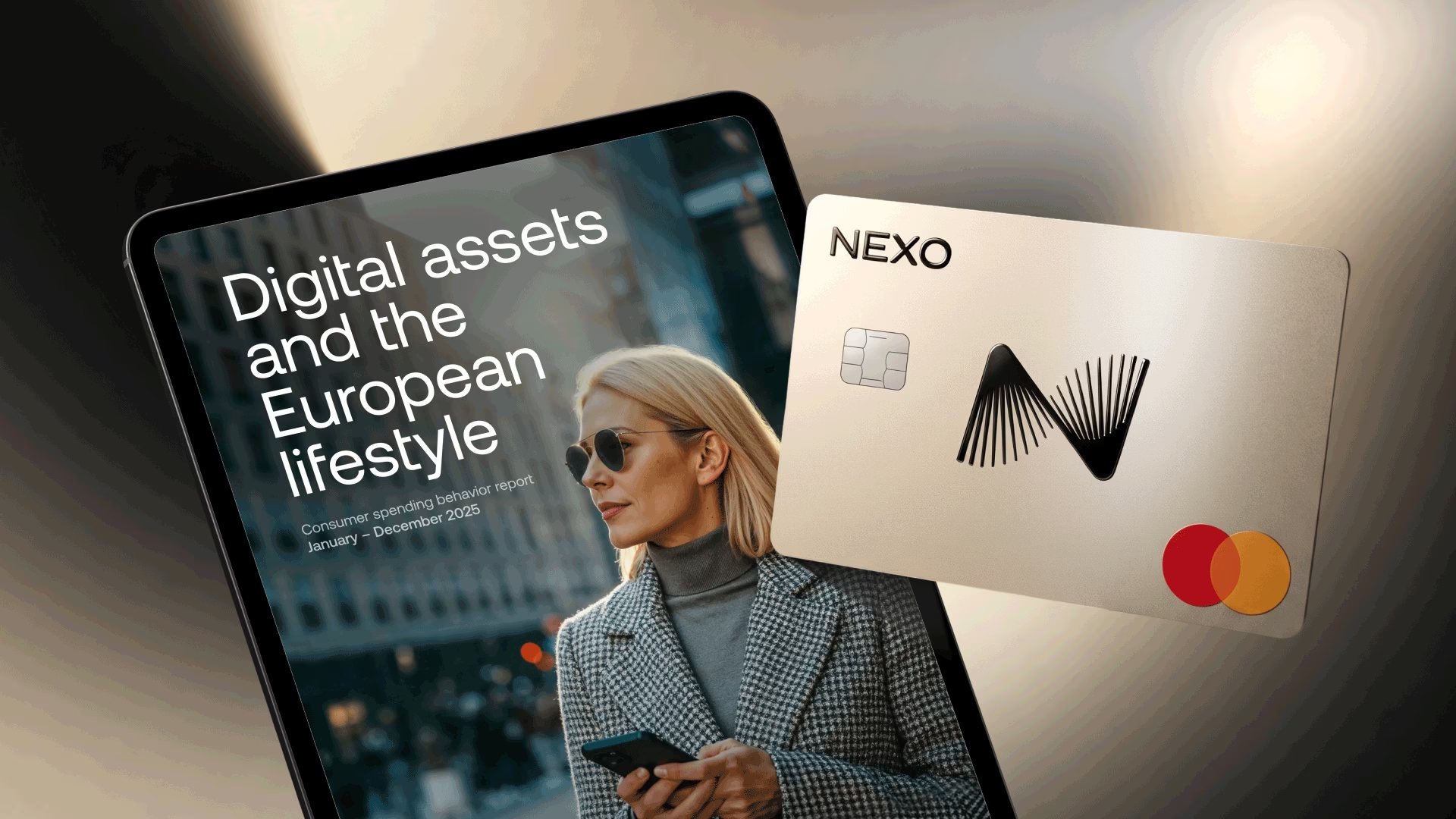
According to Nexo's new report, Digital assets and the European lifestyle, European Nexo cardholders spent about €80 per transaction in 2025. That is roughly double the euro-area card average of around €38 recorded by the European Central Bank for the second half of 2025. The findings draw on anonymised, aggregated Nexo Card transaction data across the European Economic Area from 1 January to 31 December 2025.
The headline is not that crypto holders spend differently. It is that they spend on the same things as everyone else, with bigger tickets. And they fund it in a way traditional cards cannot.
Experiences over things
Nearly a third of all Nexo Card spending went on travel, eating out and leisure. That roughly matches all other retail spending combined once groceries are set aside. Restaurants alone took 88.5% of food and drink spending.
Travel was the card's second-largest category, at 15.9% of volume. That fits the setting. Europe captured about $2 trillion of the $6.15 trillion spent on leisure travel worldwide in 2025, according to the World Travel & Tourism Council.
And the card is not reserved for special occasions. For more than half of cardholders, it also paid for the weekly grocery shop.
Where the growth is
Compared with 2024, spending on the Nexo Card rose fastest in the categories that shape a lifestyle:
- Health and wellness: up 27%
- Travel: up 22%
- Entertainment: up 22%
One lifestyle, two ways to pay for it
The Nexo Card works in two modes. In credit mode, clients borrow against holdings such as Bitcoin and Ether instead of selling them. In debit mode, the card converts digital assets at the point of sale.
When clients pay directly with crypto, stablecoins dominate. 72.7% of that spending goes through assets designed to hold a steady value, although that stability is not guaranteed.
“What the data shows is a European consumer who spends on everyday categories, with higher ticket sizes,” said Yasen Yankov, Head of Product Management at Nexo. “We see digital asset wealth, made spendable by tools like the Nexo Card, becoming a new driver of consumption.”
A growing pool of crypto wealth
The spending sits on top of a widening base of ownership. In early 2026, about one in five respondents in the Netherlands and one in six in Germany said they owned crypto assets, according to the Adan and Ipsos 2026 Barometer. In France, 53% of holders had already paid for something with crypto, most often by card.
The missing piece, Nexo argues, has been infrastructure: tools that let people use their assets without selling them, turning stored wealth into everyday spending.
Heading to the islands
Alongside the report, Nexo announced that its card is now available in several overseas territories and autonomous regions of EU countries, many of them popular travel destinations:
- France: Réunion, Martinique, Guadeloupe, French Guiana, Mayotte and Saint-Martin
- Spain: the Canary Islands, Ceuta and Melilla
- Finland: the Åland Islands
Nexo describes its card, which runs on the Mastercard network, as the first crypto card to combine credit and debit functions.
The takeaway
Payments infrastructure rarely makes headlines. People notice the dinner, the flight and the spa day, not the rails underneath. A year of Nexo Card data suggests that for a growing group of Europeans, those rails are now partly built on digital assets.